


What Is Antistatic Agent
An antistatic agent is a compound used for treatment of materials or their surfaces in order to reduce or eliminate buildup of static electricity. Static charge may be generated by the triboelectric effect or by a non-contact process using a high voltage power source. Static charge may be introduced on a surface as part of an in-mold label printing process. The role of an anti-static agent is to make the surface or the material itself slightly conductive, either by being conductive itself, or by absorbing moisture from the air; therefore, some humectants can be used. The molecules of an anti-static agent often have both hydrophilic and hydrophobic areas, similar to those of a surfactant; the hydrophobic side interacts with the surface of the material, while the hydrophilic side interacts with the air moisture and binds the water molecules. Internal anti-static agents are designed to be mixed directly into the material, external anti-static agents are applied to the surface.
Advantages of Antistatic Agent
Protecting electronics
Antistatic agents protect electronic gadgets from this danger, keeping them safe and working properly. These agents are crucial in the electronics industry to prevent static electricity from damaging delicate electronic components during production and use.
Enhancing clothing comfort
Ever had clothes that cling to you or attract dust like a magnet? Antistatic agents help prevent this by making clothes less likely to hold onto static electricity. This makes clothes more comfortable to wear and easier to care for.
Eliminating static electricity
Imagine walking across a carpet and then getting a little shock when you touch a doorknob. That's static electricity at work! Anti-static agents are like superheroes that fight against static electricity on surfaces. This static electricity can cause problems like dust sticking to things or giving people little shocks. Anti-static agents swoop in to save the day by preventing these issues.
Improving conductivity
Think of conductivity like how well something can carry electricity. Antistatic agents help materials conduct electricity better. This means they can quickly get rid of any static electricity hanging around. It's like giving materials superpowers to zap away static charges.

Why Choose Us
Our factory
Anhui Sanji Chemical Co., Ltd. found in 2021, one young established enterprise specialize in Import and Export of Chemical Products and Polyolefin Additives, mainly delivers solution and service to the industry projects of mineral, chemical, petrochemical, oil & gas.
Our product
Our product covers leaching agent and adsorbent which mainly for gold extraction application, chemicals for electro-plating, also involved in middle additives of Antioxidant, Flame Retardant, Antistatic Agent, Plasticizer, Flexibilizer, Carbon Black and etc. Besides, our imported HDPE, LLDPE, PP, PS and other polymers are widely used in mianland of China, in the field of home appliance, automobile, beverage bottol, toys, food packages, electronics and etc.
Experienced team
Over the years, our strong experienced chemical specialists and engineers team, serious inspection and laboratory test, on-time trouble shooting and site service, powerful financial capability solution with banks and big capacity routine warehouse keeping for on-time delivery.
Technical teams focus on sample test and goods inspection; logistics team focus on international seal & air transportation, warehouse keeping and domestic logistics.
Our service
Follow up the performance of supplied original products and proposed replacements, build historical curve for continuous performance improvement, research of technical improvement with necessary test; trouble shooting in case of any failure in process service which defects may arise from production, storage, transportation and logistics, optimizing whole work procedures
Types of AntiStatic Agent




Anionic antistatic agent
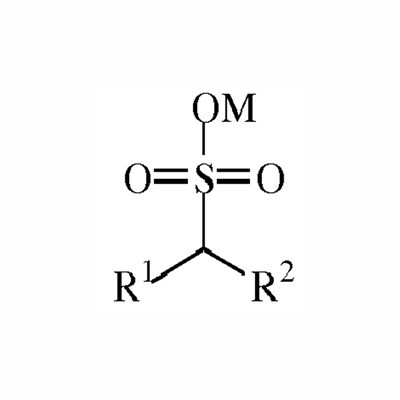
Alkyl sulfonic acid, phosphoric acid or dithiocarbamic acid are commonly alkali metal salts. They're usually more skin-friendly, do not affect plastic coloring, therefore, they are mostly used in polymer materials in pesticide and cosmetic processing, household detergent and other fields.
Non-ionic antistatic agent
Most of these anti-static agents are alkylamines of ethoxylated adipose groups. They are less resistant to static electricity than ionic anti-static agents, but they have good weather resistance and high thermal stability. They can prevent plastic aging and have good static resistance at low temperature and low humidity. Therefore, they are widely used in polyethylene, polypropylene, ABS and other styrene polymers.
Cationic antistatic agent
Most cationic anti-static agents are quaternary ammonium salts, phosphorus salts and phosphorus salts. This kind of anti-static agent is widely used in plastics. It has good antistatic performance and high affinity to polar polymer. However, it cannot be used for food contact because of its toxic and irritating effect on the skin.
Outer coating type
Coating anti-static agent is a kind of anti-static agent used on the surface of polymer materials. They are easy to use and are suitable for a variety of polymers. They are usually used for temporary or short-term static treatment.
Inner mixing type
Inner mixed type anti-static agent is a kind of anti-static agent added to the resin during the processing of the producing. The processing of this kind of anti-static agent is more troublesome than its external use, but it has long-term electrostatic protection, and can change the surface smoothness of the material in a certain degree. Most of these are non-ionic anti-static agents.
Internal anti-static additives are incorporated into the polymer by blending into the plastic during processing. This would seemingly make them permanent but a range of traditional anti-static agents are migratory and so, with time, they migrate to the surface of the material and can eventually be removed with surface wiping. Broadly speaking, higher temperatures and lower degree of crystallinity of the polymer facilitate the migration process. Permanent anti-static agents tend to be based on polymers or conductive fillers and form a network within the base polymer, producing longlasting anti-static effects. External anti-static coatings, on the other hand, are applied to the surface of the material after processing via a spray or by dipping. Typically, external anti-static coatings can be removed using solvents or simply by wiping. They tend to be applied to textile fibres or plastic packaging and, naturally, have a limited lifespan compared to internal anti-static agents due to their easy elimination. Anti-static agents are either ionic or non-ionic additives. The majority are based on organic molecules bearing polar groups, but they also exist as inorganic salts. Certain anti-static agents for polymers depend on humidity to be effective, which limits their applications and is a factor to consider. Further important considerations are the level of anti-static protection required and how long it needs to last, as non-permanent anti-static additives or coatings lose their effectiveness over time. As can be expected, in many applications, permanent anti-static properties are required.
Anti-static agents can be incorporated through the use of concentrates or masterbatches that can be used as a tool against static electricity. They tend to be based on fatty acid esters and work by neutralising the charges on the surface of a polymer, with potential and proven applications in the automotive, aerospace, construction, electronics, extraction, personal protective equipment, packaging and consumer goods industries and also represent an attractive anti-static agent for textiles. Other common types of anti-static agents include ionic liquids and electrically conductive polymers, while further examples of carbon-based anti-static agents are carbon black, graphite powder, graphene and carbon fibres.

Plastic antistatic agents
In the plastics industry, antistatic agents are used to reduce static buildup on plastic surfaces, preventing issues like dust attraction and surface defects during production and usage.
Pu antistatic agents
Polyurethane (pu) materials can also benefit from antistatic agents, which help maintain surface conductivity and prevent static-related problems in pu products.
Silicone antistatic agents
Silicone-based products utilize antistatic agents to control static electricity and ensure product quality in various applications, including medical devices and electronics.
Rubber antistatic agents
Antistatic agents play a vital role in the rubber industry, preventing static buildup on rubber surfaces and improving the overall performance and longevity of rubber products.
Ink & coating antistatic agents
Antistatic agents are incorporated into inks and coatings to reduce static electricity during printing and coating processes, ensuring smoother application and better surface finish.
Mechanism of Action of Different Anti-Static Agent
Depending on usage, the anti-static agent can be divided into coated type and intermixing two. Coated anti-static agent is applied to the polymer surface refers to the use of a class of anti-static agents. And other general use with water or alcohol before their deployment into the mass fraction of 0,5% - 2,0% of the solution, and then attached to the polymer surface so that by coating methods such as spraying or dipping, or at room temperature and then after hot-air drying to form an antistatic coating. Such multi-cationic anti-static agents, some of amphoteric and anionic anti-static agents; anti-static agent in the mix refers to products in the process of adding to an anti-static agent within the resin. Often the quality of the resin and adding 0,3% to 3,0% of the anti-static agent after mixing molding machinery. Such non-ionic polymer permanent anti-static agent and the main anions and cations type in some varieties may also be added to use. Anti-static agents in addition to a variety of molecules of polymer materials impart certain surface lubricity, reduce the friction coefficient, suppress and reduce static charge generation, the different types of the anti-static agent not only the chemical composition and the use of different ways, but the mechanism is different.
Such anti-static agent is added to the water, the anti-static agents of hydrophilic groups in the molecule is inserted into the water, while the lipophilic groups will stretch air. When the polymer material is impregnated with this solution, anti-static agents lipophilic molecules adsorbed on the surface of the material will be. After drying the impregnation, the moisture on the polymer surface after extrusion, anti-static agent molecules have hydrophilic groups arranged side toward the air, easy to absorb ambient moisture, or by a combination of hydrogen and moisture in the air to form a conductive monomolecular layers, so that the electrostatic charge generated to achieve rapid leakage antistatic purposes.
In the polymer material forming process, if it contains a sufficient concentration of anti-static agent, when the mixture in the molten state, anti-static agents molecular orientation on the most densely formed in the resin or resin and metal with air (mechanical or mold) interface arrangement, wherein the lipophilic group toward the interior of the resin, the resin hydrophilic group toward the outside. After curing the resin, the anti-static agent molecules hydrophilic group on the side toward the air are arranged to form a conductive monomolecular layer. In the processing and use, after stretching, rubbing and washing can cause surface defects anti-static agent molecular layer, antistatic performance drops. But unlike outer coating type anti-static agents, after a period of time, an anti-static agent molecules within the material will continue to migrate to the surface, so that the defect can be restored and re-display the antistatic effect. Because of these two types of anti-static agent by absorbing ambient moisture, reducing the surface resistivity of the antistatic purpose, it is more dependent on the ambient humidity. Obviously, the higher the humidity, the greater the molecular absorbent anti-static agents, antistatic performance more significant.
Polymer permanent anti-static agent is research and development in recent years, a new class of anti-static agent, is a hydrophilic polymer. When their blends and polymer matrix, on the one hand due to the strong athletic ability of their molecular chains, the intermolecular proton easy to move through the ion-conductive and conductive to release electrostatic charge generated; on the other hand, anti-static capability through its specific dispersion morphology reflected. Studies have shown that: Polymer permanent anti-static agents primarily in the article was fine layered surface or rib-like distribution, constituting a conductive surface layer, while in the central part of the almost spherical distribution, a so-called "core-shell structure", and this is the path leakage of electrostatic charge.
Introduction to the Barrier Effect of Anti-Static Agent
Anti-static agents are used in a wide range of applications to increase the surface conductivity of a range of materials to facilitate the dissipation of static electricity. The build-up of static electricity can cause a range of problems including, sparks with the resulting safety concerns, damage to sensitive electronic equipment, processing issues in fast-moving production processes such as textile spinning, pick up of dust and dirt particles by electrostatic attraction.
Anti-static agents can be internal where they are distributed within polymers to provide long term protection from static built up or can be applied as an external coating, in this case, the protection from static build-up is transient and will require periodic reapplication. Anti-static agent work by increasing the electrical conductivity of the surface, this is achieved by either being conductive or by adsorbing water onto the surface, or a combination of both. The choice of anti-static agent is dependent on the application, the most effective products tend to be based on cationic materials these which work well in application requiring maximum performance, however, they can cause issues in a wide range of applications, therefore anionic and nonionic anti-static agents are widely used.
Plastics and textiles are the biggest markets for antistatic agents. They are both related to the anti-static build up in polymer substrates. Antistatic prevention in polymers is achieved by two methods or by a combination of both. One is the ability to provide an effective barrier on the polymer film, the other is to aid the dissipation of electrons. Most polymers are insulators by nature, with conductivities ranging from 10-12 to 10-20 s cm-1. All electrons are localized in covalent bonds and cannot move in the bulk of the material as in metals. The electrical properties of the polymers are directly related to their chemical structure. Impurities such as ionic additives or moisture also can significantly contribute to the conductivity measured in polymers. As in the barrier effect, the anti-static agents migrate to the polymer or substrate surface. As the molecule is positively charged the electrons associated with static build-up can easily dissipate across the surface of the substrate. The additional effect of attracting water molecules also creates a barrier effect to help further improve the static build-up protection.
Anhui Sanji Chemical Co., Ltd. found in 2021, one young established enterprise specialize in Import and Export of Chemical Products and Polyolefin Additives, mainly delivers solution and service to the industry projects of mineral, chemical, petrochemical, oil & gas. Our product covers leaching agent and adsorbent which mainly for gold extraction application, chemicals for electro-plating, also involved in middle additives of Antioxidant, Flame Retardant, Antistatic Agent, Plasticizer, Flexibilizer, Carbon Black and etc. Besides, our imported HDPE, LLDPE, PP, PS and other polymers are widely used in mianland of China, in the field of home appliance, automobile, beverage bottol, toys, food packages, electronics and etc. Our head quarter locates in Hefei city, capital of Anhui Province, main market is in mainland, Middle east and Africa. Over the years, our strong experienced chemical specialists and engineers team, serious inspection and laboratory test, on-time trouble shooting and site service, powerful financial capability solution with banks and big capacity routine warehouse keeping for on-time delivery, which enable us to build long term and strategic partnership with world famous brands including BASF, DOW chemical, INEOS, LG, MITSUBISHI, SANYO, Clariant, Eastman, Dupont , Arkema, Orion, Cabot, Jacob and etc were the driving forces for our successful development. Moreover, strategic and annual agency agreement with polymer manufactures also enable us steady supply to related industry day and month in most ecomical way.


FAQ
We're well-known as one of the leading antistatic agent manufacturers and suppliers in China, featured by quality products and low price. If you're going to buy or wholesale cheap antistatic agent, welcome to get quotation from our factory.
Clariant HOSTAPUR SAS 93, Clariant Antistatic Agent, SANYO PELECTRON PVL