


What Is Adsorbent
Adsorbents are insoluble materials with a liquid coating on their surface, such as capillaries and pores. When a substance, like a sponge, can hold a certain amount of liquid in tiny chambers, it is said to be an adsorbent. Adsorbents are used in practically all systems, including chemical, biological, and physical ones, through the adsorption process. Adsorbents are essential in chemical absorption, which occurs when a substance is trapped on the surface of a material. They are also important in industry, used in water filtration, activated charcoal, and synthetic resins, among other things. Adsorbents can also convert waste heat into cold water for use in air conditioning and other activities. Adsorbent composition is instrumental in the industry for delaying corrosion in different equipment and machinery, such as mufflers—Internal corrosion of metal mufflers and combustion engines, for example, can be avoided by maintaining the exterior void area of adsorbent mass in combination with crystalline zeolites and other crystal forms that have a synergistic impact on corrosion.
Advantages of Adsorbent
Versatility
Effective for the separation of a wide range of organic compounds.
By choosing appropriate solvents, one can tailor the separation to a particular mixture.
Scalability
Can be used for both analytical and preparative purposes, ranging from milligrams to multiple grams of material.
Simple setup
The equipment is generally simple, making it accessible for most laboratories.
High resolution
With optimization, very close-eluting compounds can be separated.




Why Choose Us
Our factory
Anhui Sanji Chemical Co., Ltd. found in 2021, one young established enterprise specialize in Import and Export of Chemical Products and Polyolefin Additives, mainly delivers solution and service to the industry projects of mineral, chemical, petrochemical, oil & gas.
Our product
Our product covers leaching agent and adsorbent which mainly for gold extraction application, chemicals for electro-plating, also involved in middle additives of Antioxidant, Flame Retardant, Antistatic Agent, Plasticizer, Flexibilizer, Carbon Black and etc. Besides, our imported HDPE, LLDPE, PP, PS and other polymers are widely used in mianland of China, in the field of home appliance, automobile, beverage bottol, toys, food packages, electronics and etc.
Experienced team
Over the years, our strong experienced chemical specialists and engineers team, serious inspection and laboratory test, on-time trouble shooting and site service, powerful financial capability solution with banks and big capacity routine warehouse keeping for on-time delivery.
Technical teams focus on sample test and goods inspection; logistics team focus on international seal & air transportation, warehouse keeping and domestic logistics.
Our service
Follow up the performance of supplied original products and proposed replacements, build historical curve for continuous performance improvement, research of technical improvement with necessary test; trouble shooting in case of any failure in process service which defects may arise from production, storage, transportation and logistics, optimizing whole work procedures

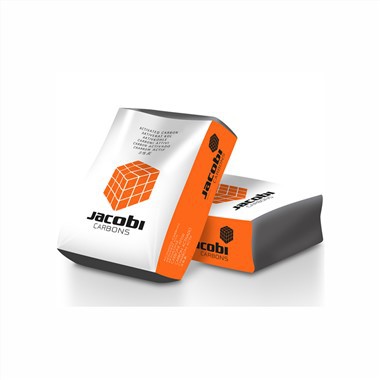
Activated carbon
Made from carbonaceous materials like coal, wood, or coconut shells. Highly porous and effective for adsorbing organic compounds, odors, and some inorganic substances.
Silica gel
Made from synthetic silicon dioxide. Effectively adsorbs water and polar compounds.
Zeolites
Aluminosilicate minerals with a microporous crystalline structure. Used for adsorbing small molecules and ions.
Alumina
Made from aluminum oxide. Primarily used for adsorbing basic compounds and polar molecules.
Polymeric adsorbents
Synthetic organic polymers designed for specific adsorption applications.
Applications of Adsorbent




Production of high vacuum
The last traces of air can be absorbed by charcoal from a vessel evacuated by a vacuum pump to achieve a very high vacuum.
Gas masks
A gas mask (a device made of activated charcoal or a combination of adsorbents) is commonly used in coal mines to adsorb poisonous gases.
Heterogeneous catalysis
Adsorption of reactants on the solid surfaces of catalysts accelerates the reaction. There are numerous industrially important gaseous reactions that use solid catalysts. The production of ammonia with iron as a catalyst, the production of H2SO4 through a contact process, and the use of finely divided nickel in the hydrogenation of oils are all excellent examples of heterogeneous catalysis.
Separation of inert gases
Adsorption on coconut charcoal at different temperatures can separate a mixture of noble gases due to the difference in the degree of adsorption of gases by charcoal.
Froth floatation process
Using pine oil and a frothing agent, a low-grade sulphide ore is concentrated by separating it from silica and other earthy matter.
Adsorption indicators
Surfaces of certain precipitates, such as silver halides, have the property of adsorbing dyes such as eosin, fluorescein, and others, resulting in a distinct colour at the endpoint.
Chromatographic analysis
Chromatographic analysis based on the adsorption phenomenon has a variety of applications in analytical and industrial fields.
Purification of water
Impurities are adsorbed on the alum stone when alum stone is added to water, and the water is purified.
Separation of noble gases by Dewar’s flask process
In the presence of heated coconut charcoal, a mixture of noble gases (Neon, Argon, and Krypton) is passed through a Dewar’s flask.
When selecting adsorbents and absorbents, the most important properties to consider are the selectivity, surface area, and regeneration ability.
Selectivity is the amount of specificity a sorbent has in the materials that it can capture. A very unselective sorbent captures many substances, and a selective sorbent only removes specific ones.
Surface area is the amount of material a sorbent has available for contact and determines the capacity of material a sorbent can capture, the capture rate of the sorbent, and the retention rate of the substance within the sorbent.
Regeneration is the ability of a sorbent to be reused after capturing to its capacity. Many desiccants can be heat treated in order to regenerate the material after reaching water capture capacity. Other factors to consider when selecting sorbents are bulk density, chemical inertness, and ease of application.
Higher surface area
Surface area is related to pore size: Smaller pores mean more total internal surface area. You can visualize this concept better if you do a simple thought experiment. Imagine a cube, 1 cm length per side. What is its total surface area? What is the total surface area if you divide the cube into smaller cubes, each with 0.1 cm sides? What if you divide the cube into cubes with 0.01 cm sides? Or even 0.001 cm sides? More storage area (more internal surface area) means faster contaminant removal.
Greater heat-of-adsorption
When molecules adsorb, they change to a lower energy state, just as they do when they condense from a gas to a liquid. The greater the heat of adsorption of an atom or molecule, the lower energy state it is in after it adsorbs on the internal surface of the adsorbent. Water molecules have a higher heat-of-adsorption (lower adsorbed energy state) on zeolite molecular sieve than they do on activated alumina.
Smaller adsorbent particle size
The smaller the diameter of the pellet, extrudate, bead, or granule, the less distance the contaminant molecule has to diffuse(travel) to reach the adsorbent’s internal surface. Another way to look at this: Smaller diameter particles have more external surface area per unit of mass. The more external surface area there is, the more places the contaminant atom/molecule has to enter the adsorbent’s pore structure.
Recovery of Rare-Earth Metals from Aqueous Solutions by Bio/Adsorbent
The choice of the adsorbent material is essential when one wants to study the removal of a given component by the process of adsorption. Such choice directly affects the economic viability and efficiency of the process. Adsorbents are natural or synthetic substances with microcrystalline or amorphous structure whose surface can present pores capacity of acting in the separation process.60 The pore size of an adsorbent material is crucial for the access of the adsorbate species. According to International Union of Pure and Applied Chemistry (IUPAC), pore diameters smaller than 2 nm characterize microporous materials, diameters between 2 and 50 nm are typical mesoporous materials, and diameters larger than 100 nm are found in macroporous materials.
In addition to the steric hindrance caused by the difference/similarities in the poro size of the adsorbent and the size of an adsorbate, other different mechanisms may dominate the adsorption process. Five mechanisms governing metal adsorption have been proposed. They include: (1) electrostatic interactions between metals and adsorbent surface; (2) cation exchange between metals and protons or alkaline metals on adsorbent surface; (3) metal complexation with functional groups on the structure of adsorbent; (4) metal precipitation to form insoluble compounds; and (5) reduction of metal species and subsequent adsorption of the reduced metal species. The role of each of adsorption mechanisms and capacity varies considerably with adsorbent properties and target metals.
Activated carbon, silica gel, activated alumina, zeolites and synthetic polymeric resins are the main commercial adsorbents used. The requirements for practical applications of adsorbents include high selectivity for rare-earth ions, adsorbability at low pH, easy desorption of metal ions, high rates of adsorption and desorption, high adsorptive capacity, selectivity, regenerability, low cost, compatibility, and high mechanical resistance. An adsorbent will hardly be great in all these aspects.
Activated carbons are widely being explored as adsorbents in the emerging field of environmental because of their well-developed porous structure and tunable surface chemistry. The modification of activated carbons is known to play a key role in enhancing the adsorption efficiency because of the change in the surface morphology and the function by particular functional groups. On the other hand, improved the adsorption capacity of activated carbon modified with oxidizing agent potassium permanganate for recovery La, Yb, Lu, Eu, Y and Sc. The physicochemical properties of activated carbon were improved after oxidation, which made activated carbon possess not only a more hydrophilic functional groups (e.g., –COOH) but also more negatively charged surface.
Produced Water Adsorbents
Natural Adsorbents
Adsorbents obtained through natural means were explored by a number of studies for the treatment of PW. Most of these studies reported better economics when compared to commercial adsorbents, making them more favorable. As mentioned earlier, natural adsorbents discussed in this section were materials either obtained from the Earth’s crust or biological sources; agriculture (trees and their derivatives) or food wastes.
Earth Crust Adsorbents
Several researchers have studied the effectiveness of adsorbents that originated from the Earth’s crust and mantle for PW treatment. Goethite (𝛼FeO(OH)), which is a naturally occurring compound present in the Earth’s crust, was tested. For the removal of arsenate (As) in water with and without oil coating. The oil coating on the goethite was reported to not affect the kinetics of adsorption, while it halved the adsorption capacity. The study also mentioned that the surface area of goethite was the controlling variable in the adsorption process. Similar to geothite, graphite is found in the Earth’s mantle.
Bio-Adsorbents
In addition to earth-based adsorbents, Bio-adsorbents from biological sources were of interest to various researchers for the treatment of different types of industrial wastewater. The adsorbents were observed in the literature to be sourced from either agricultural practices or the food chain waste. As described earlier, heavy metals are potential contaminants of PW depending on the location its produced used olive branches as a source for obtaining activated carbon for the adsorption of lead, zinc, copper and cadmium from water. The study reported that pH was the most influential element on the olive branch adsorbent . In terms of branches, also oil palm branches were examined for the adsorption of mercury and methyl mercury in water. The branches in the study were modified with an amine-containing ligand that enhanced the adsorption process. The study reported that oil palm branch-based adsorbent was stable for a number of regeneration cycles.
Lab Synthesized Adsorbents
Lab synthesized adsorbents in this paper were defined as emerging adsorbents that were obtained through a series of lab experiments for the purpose of treating PW. A group of studies were observed recently to use industrial wastes usage of deposited carbon (waste) from a diesel engine for the removal of oil. These deposits were shown to have an independence from initial oil concentration. Furthermore, the adsorbed oil increased with the increase of carbon deposit dosage. The study concluded that carbon deposits are cheaper alternatives to activated carbon for oil removal.
Commercial Adsorbents
Non-natural adsorbents such as the commercially available ones were also investigated for the treatment used zeolite as an adsorbent for the removal of sodium cation (Na+) and toluene respectively. For the Na+study, PW from coalbed natural showed that Na+ adsorption was dependent on the zeolite size. This dependence was reported to be inversely proportional, as adsorption occured more in smaller sized particles. The adsorption was also examined in a field site to evaluate the usefulness of zeolites. This test reported that treated PW lowered the damage caused to the soil by Na+ions. In the toluene study, the investigation was conducted in a column and batch experiments. The study reported that column experiments showed higher adsorption capacity with zeolite being stable throughout desorption. It is worth mentioning that the zeolite was coated with diphenyldichlorosilane.
Anhui Sanji Chemical Co., Ltd. found in 2021, one young established enterprise specialize in Import and Export of Chemical Products and Polyolefin Additives, mainly delivers solution and service to the industry projects of mineral, chemical, petrochemical, oil & gas. Our product covers leaching agent and adsorbent which mainly for gold extraction application, chemicals for electro-plating, also involved in middle additives of Antioxidant, Flame Retardant, Antistatic Agent, Plasticizer, Flexibilizer, Carbon Black and etc. Besides, our imported HDPE, LLDPE, PP, PS and other polymers are widely used in mianland of China, in the field of home appliance, automobile, beverage bottol, toys, food packages, electronics and etc. Our head quarter locates in Hefei city, capital of Anhui Province, main market is in mainland, Middle east and Africa. Over the years, our strong experienced chemical specialists and engineers team, serious inspection and laboratory test, on-time trouble shooting and site service, powerful financial capability solution with banks and big capacity routine warehouse keeping for on-time delivery, which enable us to build long term and strategic partnership with world famous brands including BASF, DOW chemical, INEOS, LG, MITSUBISHI, SANYO, Clariant, Eastman, Dupont , Arkema, Orion, Cabot, Jacob and etc were the driving forces for our successful development. Moreover, strategic and annual agency agreement with polymer manufactures also enable us steady supply to related industry day and month in most ecomical way.


FAQ
We're well-known as one of the leading adsorbent manufacturers and suppliers in China, featured by quality products and low price. If you're going to buy or wholesale cheap adsorbent, welcome to get quotation from our factory.
RPMH 1003, Haycarb RPMH 1003, Haycarb RMPC1003