

How does Cyanogran behave in different chemical environments?
Cyanogran, a well - known and important chemical compound, shows diverse behaviors in different chemical environments. As a Cyanogran supplier, I have witnessed its wide - ranging applications and the unique ways it interacts with various substances. In this blog, we will explore how Cyanogran behaves under different chemical conditions, which can provide valuable insights for those in relevant industries.
1. Chemical Composition and Basic Properties of Cyanogran
Cyanogran is mainly a form of cyanide - based product. Cyanides are compounds that contain the cyano group (-CN). The chemical reactivity of Cyanogran is largely determined by the high electronegativity difference between carbon and nitrogen in the cyano group, which makes the C - N bond polarized. This polarization endows Cyanogran with strong nucleophilic and complex - forming abilities.

2. Behavior in Acidic Environments
In acidic environments, Cyanogran undergoes significant chemical changes. When Cyanogran is exposed to strong acids such as hydrochloric acid (HCl) or sulfuric acid (H₂SO₄), the cyanide ions (CN⁻) in Cyanogran react with hydrogen ions (H⁺) from the acid. The reaction is as follows: [CN^-+H^+\rightleftharpoons HCN] Hydrogen cyanide (HCN) is a highly toxic and volatile gas. The formation of HCN in acidic solutions is an important consideration for safety. For example, in industrial processes where Cyanogran is used, if there is an accidental mixing with acids, it can lead to the release of HCN gas, which poses a serious threat to human health and the environment.
The equilibrium of this reaction is affected by the pH of the solution. As the acidity increases (lower pH), the equilibrium shifts to the right, promoting the formation of more HCN. This property also has applications in some chemical synthesis processes. For instance, in the production of certain organic compounds, the controlled release of HCN from Cyanogran in an acidic medium can be used as a source of cyanide groups for nucleophilic substitution reactions.
3. Behavior in Alkaline Environments
In alkaline environments, Cyanogran is relatively more stable compared to acidic conditions. When in contact with strong bases like sodium hydroxide (NaOH) or potassium hydroxide (KOH), the cyanide ions in Cyanogran do not readily react with hydroxide ions (OH⁻). Instead, they remain in the form of free cyanide ions in the solution.
Alkaline conditions are often preferred in many industrial applications of Cyanogran. For example, in the gold extraction process, Cyanogran is used as a leaching agent. In an alkaline medium, the cyanide ions react with gold particles to form a soluble gold - cyanide complex. The reaction can be represented as: [4Au + 8CN^-+O_2 + 2H_2O\rightarrow4[Au(CN)_2]^-+4OH^-] This complex - forming reaction is crucial for the efficient extraction of gold from ores. By maintaining an alkaline environment, the stability of the cyanide ions is ensured, and the reaction with gold can proceed smoothly.
4. Behavior in Oxidizing Environments
In oxidizing environments, Cyanogran can be oxidized. Strong oxidizing agents such as chlorine (Cl₂), hydrogen peroxide (H₂O₂), or permanganate ions ((MnO_4^-)) can react with cyanide ions. For example, when Cyanogran is treated with chlorine in an aqueous solution, the following reaction occurs: [2CN^-+5Cl_2 + 8OH^-\rightarrow2CO_2+N_2 + 10Cl^-+4H_2O] This reaction is used in the treatment of cyanide - containing wastewater. By adding appropriate oxidizing agents, the toxic cyanide ions can be converted into less - harmful substances such as carbon dioxide and nitrogen.
However, the oxidation of Cyanogran needs to be carefully controlled. If the oxidation is incomplete, it may produce intermediate products such as cyanates ((CNO^-)), which are still toxic to some extent. Therefore, in wastewater treatment processes, strict monitoring and control of reaction conditions are necessary.
5. Behavior in Complexing Environments
Cyanogran has a strong ability to form complexes with many metal ions. In addition to the gold - cyanide complex mentioned above, it can also form complexes with other metals such as silver, copper, and nickel. For example, the reaction between Cyanogran and copper ions ((Cu^{2 +})) can form a copper - cyanide complex: [2Cu^{2+}+10CN^-\rightarrow2[Cu(CN)_4]^{3 -}+(CN)_2] These metal - cyanide complexes have different stabilities and solubilities depending on the nature of the metal ions and the reaction conditions. In some cases, the formation of metal - cyanide complexes can be used for metal separation and purification processes.

6. Comparison with Other Cyanide - Based Products
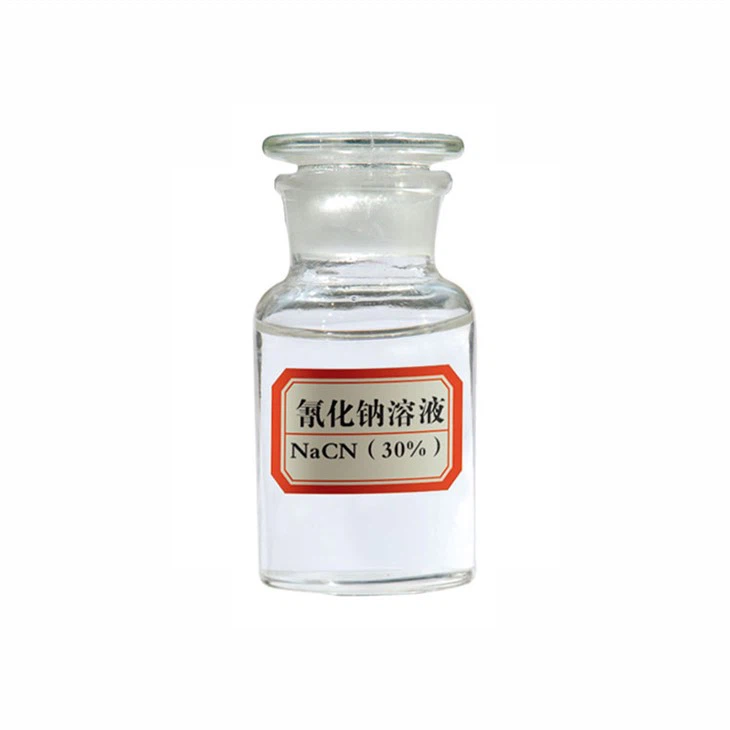
Cyanogran is often compared with other cyanide - based products such as Potassium Cyanide, Sodium Cyanide, and Sodium Cyanide Solution. While they all contain cyanide ions and have similar chemical reactivities in many aspects, there are also some differences.
Potassium cyanide and sodium cyanide are solid forms, similar to Cyanogran in composition. However, their solubilities in water may vary slightly, which can affect their applications in different processes. Sodium cyanide solution, on the other hand, is already in a dissolved state, which can simplify some industrial operations that require a liquid form of cyanide.
7. Industrial Applications and Considerations
The unique behavior of Cyanogran in different chemical environments makes it widely used in various industries. In addition to gold extraction, it is also used in the electroplating industry. In electroplating, Cyanogran can be used to form metal - cyanide complexes, which can provide a stable source of metal ions for the plating process.
However, due to the high toxicity of cyanide compounds, strict safety measures must be taken in all industries using Cyanogran. Workers need to be properly trained to handle Cyanogran, and appropriate safety equipment such as respirators and protective clothing should be provided. In addition, environmental protection is also a major concern. Wastewater containing cyanide must be treated properly to meet environmental standards before being discharged.
8. Conclusion and Call to Action
In conclusion, Cyanogran shows diverse behaviors in different chemical environments, which are determined by its chemical structure and the nature of the surrounding substances. Understanding these behaviors is crucial for its safe and effective use in various industries.
As a Cyanogran supplier, we are committed to providing high - quality Cyanogran products and relevant technical support. If you are interested in our Cyanogran products or have any questions about its applications, please feel free to contact us for further discussions and potential procurement opportunities. We look forward to working with you to meet your specific needs in the chemical industry.
References
- Cotton, F. A., & Wilkinson, G. (1988). Advanced Inorganic Chemistry. John Wiley & Sons.
- Snoeyink, V. L., & Jenkins, D. (1980). Water Chemistry. John Wiley & Sons.
- Hayes, K. F. (1998). Principles and Applications of Aquatic Chemistry. Oxford University Press.