

How does Cymag interact with organic compounds?
As a Cymag supplier, I've witnessed firsthand the remarkable versatility and reactivity of Cymag in its interactions with organic compounds. Cymag, which commonly refers to sodium cyanide (NaCN) or potassium cyanide (KCN), is a powerful chemical with a wide range of applications in the organic synthesis and industrial sectors. In this blog, we'll explore the fascinating ways in which Cymag interacts with various organic compounds, shedding light on its mechanisms, applications, and safety considerations.
1. Basic Properties of Cymag
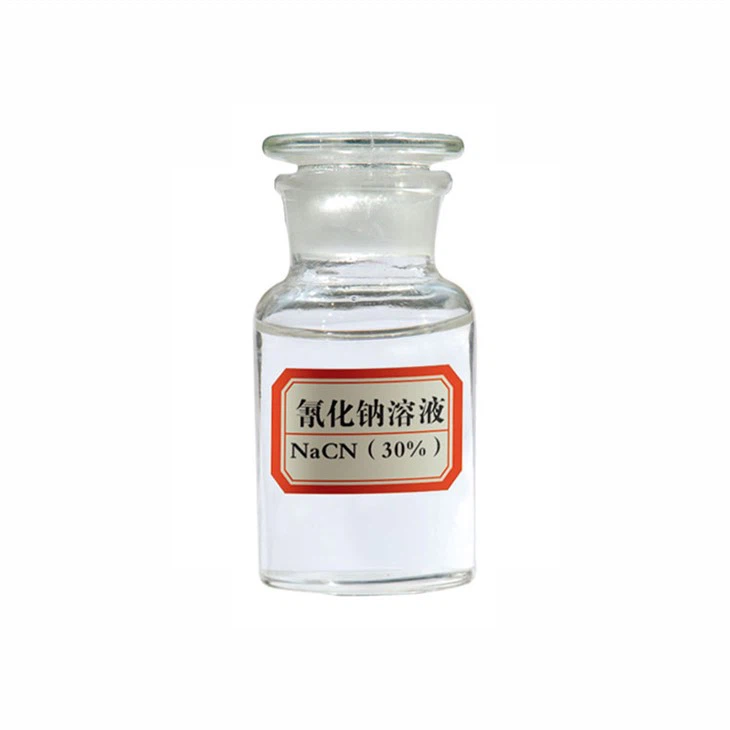
Before delving into its interactions with organic compounds, let's briefly review the basic properties of Cymag. Sodium Cyanide and Potassium Cyanide are highly soluble in water, forming Sodium Cyanide Solution or potassium cyanide solution, respectively. These solutions are colorless and have a characteristic bitter almond odor, although many people cannot detect this odor due to a genetic trait.
Cymag is a strong nucleophile, meaning it has a high affinity for positively charged or electron - deficient centers in organic molecules. This property is the key to its numerous reactions with organic compounds.
2. Nucleophilic Substitution Reactions
One of the most common ways Cymag interacts with organic compounds is through nucleophilic substitution reactions. In these reactions, the cyanide ion (CN⁻) from Cymag attacks an electrophilic carbon atom in an organic molecule, displacing a leaving group.
2.1 Reaction with Alkyl Halides
Alkyl halides, such as bromoethane (CH₃CH₂Br), react with Cymag in a typical SN₂ (substitution nucleophilic bimolecular) reaction. The cyanide ion attacks the carbon atom attached to the bromine atom, and the bromide ion is displaced as a leaving group. The general reaction can be represented as:
R - X+NaCN→R - CN+NaX
where R is an alkyl group and X is a halogen (e.g., Cl, Br, I).
This reaction is extremely useful in organic synthesis as it allows for the introduction of a cyano group (-CN) into an organic molecule. The cyano group can then be further transformed into other functional groups, such as carboxylic acids through hydrolysis or amines through reduction.
2.2 Reaction with Epoxides
Epoxides are three - membered cyclic ethers with high ring strain. Cymag can react with epoxides in a ring - opening reaction. The cyanide ion attacks the less - substituted carbon atom of the epoxide ring, opening the ring and forming a β - hydroxy nitrile.
This reaction is regioselective, meaning it preferentially occurs at the less - substituted carbon of the epoxide due to steric factors. The resulting β - hydroxy nitriles are important intermediates in the synthesis of various pharmaceuticals and fine chemicals.
3. Addition Reactions
Cymag can also participate in addition reactions with certain organic compounds, particularly those containing carbon - carbon double or triple bonds.
3.1 Reaction with Aldehydes and Ketones
Aldehydes and ketones react with Cymag in a nucleophilic addition reaction. The cyanide ion attacks the carbonyl carbon atom, which is electrophilic due to the electron - withdrawing effect of the oxygen atom. The reaction proceeds as follows:
R₂C = O+NaCN+H₂O→R₂C(OH)CN+NaOH
This reaction forms a cyanohydrin, which is a valuable intermediate in organic synthesis. Cyanohydrins can be further converted into α - hydroxy acids or other complex organic molecules.
3.2 Reaction with α,β - Unsaturated Carbonyl Compounds
α,β - Unsaturated carbonyl compounds, such as acrolein (CH₂ = CH - CHO), react with Cymag in a conjugate addition reaction. The cyanide ion attacks the β - carbon atom of the α,β - unsaturated system, followed by protonation to form a β - cyano carbonyl compound.
This reaction is an important method for the construction of carbon - carbon bonds and the introduction of a cyano group into a more complex organic framework.
4. Applications in Organic Synthesis
The reactions of Cymag with organic compounds have a wide range of applications in organic synthesis and the chemical industry.
4.1 Synthesis of Pharmaceuticals
Cymag - mediated reactions are used in the synthesis of many pharmaceuticals. For example, the synthesis of some anti - hypertensive drugs involves the introduction of a cyano group through a reaction with Cymag. The cyano group can then be modified to form the desired functional groups in the final drug molecule.
4.2 Production of Polymers
Cymag is also used in the production of certain polymers. For instance, the synthesis of polyacrylonitrile (PAN), a widely used polymer in the textile and carbon fiber industries, starts with the reaction of acrylonitrile, which can be prepared from the reaction of an appropriate organic compound with Cymag.

5. Safety Considerations
It's crucial to note that Cymag is an extremely toxic substance. Inhalation, ingestion, or skin contact with Cymag can be fatal. When handling Cymag, strict safety protocols must be followed.
Workers should wear appropriate personal protective equipment, including gloves, goggles, and respirators. All reactions involving Cymag should be carried out in a well - ventilated fume hood to prevent the inhalation of toxic fumes. In case of accidental exposure, immediate medical attention is required.
6. Conclusion
In conclusion, Cymag's interactions with organic compounds are diverse and highly valuable in organic synthesis and industrial applications. Its role as a strong nucleophile enables a wide range of reactions, including nucleophilic substitution and addition reactions, which are essential for the construction of complex organic molecules.
However, due to its high toxicity, careful handling and strict safety measures are a must. If you are involved in organic synthesis or any industry that could benefit from the use of Cymag, we are here to provide you with high - quality Cymag products. Whether you need Sodium Cyanide, Potassium Cyanide, or Sodium Cyanide Solution, we can offer reliable supply and technical support. Contact us to discuss your procurement needs and start a fruitful business partnership.
References
- Smith, M. B., & March, J. (2007). March's Advanced Organic Chemistry: Reactions, Mechanisms, and Structure. Wiley.
- Carey, F. A., & Sundberg, R. J. (2007). Advanced Organic Chemistry Part A: Structure and Mechanisms. Springer.