

How does KCN participate in complexation reactions?
Hey there! I'm a supplier of KCN, and today I'm super excited to chat with you about how KCN participates in complexation reactions. Complexation reactions are pretty cool chemical processes where a central metal ion gets surrounded by ligands, forming a complex. And KCN, or potassium cyanide, is a real star player in these reactions.

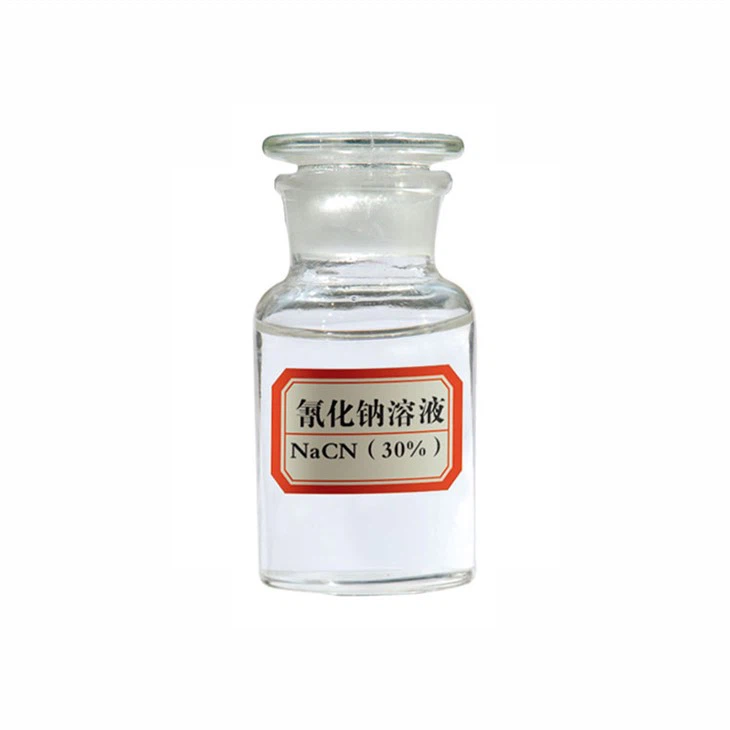
Let's start with the basics. KCN is an inorganic compound with the formula KCN. It's a white crystalline solid that looks a bit like table salt, but don't be fooled - it's extremely toxic. In solution, KCN dissociates into potassium ions (K⁺) and cyanide ions (CN⁻). It's these cyanide ions that are the key players in complexation reactions.
Cyanide ions are what we call strong-field ligands. What does that mean? Well, ligands are molecules or ions that can donate a pair of electrons to a metal ion. Strong-field ligands cause a large splitting of the d - orbitals of the metal ion. This splitting is important because it affects the stability and properties of the resulting complex.
One of the most well - known complexation reactions involving KCN is with transition metals. Take gold, for example. In the mining industry, gold is often extracted from its ores using a process called cyanidation. When KCN is added to a gold - containing ore in the presence of oxygen, a complexation reaction occurs. The cyanide ions react with the gold metal to form a soluble complex ion, [Au(CN)₂]⁻.
The reaction can be written as follows:
4Au + 8KCN+ O₂ + 2H₂O → 4K[Au(CN)₂]+ 4KOH
Here, the cyanide ions act as ligands and form a linear complex with the gold ion. The formation of this complex is crucial because it allows the gold to be separated from the ore and then recovered later. If you're interested in other cyanide - based leaching agents, you can check out Sodium Cyanide Solution and Sodium Cyanide on our website.
Another example is the reaction with silver. Similar to gold, silver can also form a complex with cyanide ions. The reaction is:
2Ag + 4KCN+ O₂ + 2H₂O → 2K[Ag(CN)₂]+ 2KOH
In this case, a soluble [Ag(CN)₂]⁻ complex is formed. This complexation reaction is used in the silver extraction process.
Now, let's talk about the mechanism of these complexation reactions. When a cyanide ion approaches a metal ion, the lone pair of electrons on the carbon atom of the CN⁻ ion is donated to an empty orbital of the metal ion. This forms a coordinate covalent bond. The cyanide ion has a triple bond between the carbon and nitrogen atoms, and the carbon end is the one that binds to the metal ion because it has a partial negative charge.
The stability of the complexes formed with KCN is due to several factors. First, the cyanide ion is a small ligand, which allows it to get close to the metal ion. Second, the strong - field nature of the cyanide ligand leads to a large crystal - field splitting energy. This means that the electrons in the d - orbitals of the metal ion are more stable in the lower - energy orbitals, making the complex more stable overall.
In addition to transition metals, KCN can also participate in complexation reactions with some main - group metals. For instance, it can react with zinc. When KCN is added to a solution containing zinc ions (Zn²⁺), a complex ion [Zn(CN)₄]²⁻ is formed. The reaction is:
Zn²⁺+ 4CN⁻ → [Zn(CN)₄]²⁻
This complex has a tetrahedral geometry. The cyanide ions surround the zinc ion, and the coordinate covalent bonds hold the complex together.
The complexation reactions of KCN have many practical applications. Apart from metal extraction, they are also used in electroplating. In electroplating, metal complexes are used to control the deposition of metal ions onto a substrate. For example, using a gold - cyanide complex in electroplating can result in a more uniform and adherent gold coating.
If you're in the business of metal extraction, electroplating, or any other industry that requires complexation reactions, then Potassium Cyanide could be a valuable chemical for you. We, as a KCN supplier, can provide high - quality KCN to meet your needs.
It's important to note that working with KCN requires strict safety measures. As I mentioned earlier, KCN is extremely toxic. It can be absorbed through the skin, inhaled as dust or fumes, or ingested. When handling KCN, proper protective equipment such as gloves, goggles, and respirators should be worn. Adequate ventilation is also necessary to prevent the build - up of toxic fumes.
In conclusion, KCN is a powerful chemical when it comes to complexation reactions. Its cyanide ions can form stable complexes with a variety of metal ions, which has important applications in industries like mining and electroplating. If you're interested in purchasing KCN for your business, don't hesitate to reach out for a procurement discussion. We're here to provide you with the best quality products and services.
References
- Housecroft, C. E., & Sharpe, A. G. (2012). Inorganic Chemistry (4th ed.). Pearson.
- Huheey, J. E., Keiter, E. A., & Keiter, R. L. (1993). Inorganic Chemistry: Principles of Structure and Reactivity (4th ed.). HarperCollins.