

How does KCN react with aldehydes?
Potassium cyanide (KCN) is a highly toxic yet industrially important chemical compound. As a KCN supplier, I often receive inquiries about its reactivity, especially with aldehydes. In this blog, we will delve into the reaction mechanism, the products formed, and the significance of this reaction in various industries.
Reaction Mechanism
The reaction between KCN and aldehydes is a nucleophilic addition reaction. KCN dissociates in solution to form cyanide ions (CN⁻), which act as strong nucleophiles. Aldehydes have a carbonyl group (C=O), where the carbon atom is electrophilic due to the electronegativity difference between carbon and oxygen. The cyanide ion attacks the electrophilic carbon atom of the carbonyl group, breaking the π - bond of the carbon - oxygen double bond.
The general reaction can be represented as follows:
RCHO + KCN → RCH(OH)CN
Here, R represents an alkyl or aryl group. The cyanide ion adds to the carbonyl carbon, and a proton from the solvent (usually water or an alcohol) adds to the oxygen atom of the carbonyl group, resulting in the formation of a cyanohydrin.
The reaction proceeds through a two - step mechanism. In the first step, the cyanide ion attacks the carbonyl carbon, forming a tetrahedral intermediate. This intermediate is unstable and quickly undergoes protonation in the second step to form the cyanohydrin product.
Factors Affecting the Reaction
Several factors can influence the reaction between KCN and aldehydes:
pH of the Solution
The reaction is typically carried out in a slightly basic medium. At low pH, the cyanide ions are protonated to form hydrocyanic acid (HCN), which is a weak nucleophile. In a basic solution, the concentration of cyanide ions is high, facilitating the nucleophilic attack on the aldehyde.
Temperature
The reaction rate increases with an increase in temperature. However, since KCN is highly toxic and hydrocyanic acid can be released at higher temperatures, the reaction is usually carried out at moderate temperatures to ensure safety.
Structure of the Aldehyde
The reactivity of aldehydes depends on the nature of the R group. Electron - withdrawing groups on the aldehyde increase the electrophilicity of the carbonyl carbon, making the aldehyde more reactive towards the cyanide ion. On the other hand, electron - donating groups decrease the electrophilicity and hence the reactivity.
Significance of the Reaction
The formation of cyanohydrins from the reaction of KCN with aldehydes has several important applications:
Organic Synthesis
Cyanohydrins are versatile intermediates in organic synthesis. They can be further converted into a variety of functional groups. For example, hydrolysis of cyanohydrins can lead to the formation of α - hydroxy carboxylic acids. Reduction of cyanohydrins can yield amino alcohols. These products are used in the synthesis of pharmaceuticals, agrochemicals, and fine chemicals.
Asymmetric Synthesis
Asymmetric synthesis of cyanohydrins is an area of active research. By using chiral catalysts, it is possible to obtain enantiomerically pure cyanohydrins, which are valuable building blocks for the synthesis of chiral drugs and natural products.
Safety Considerations
As a KCN supplier, I must emphasize the extreme toxicity of potassium cyanide. KCN can release hydrocyanic acid (HCN) gas, which is highly toxic and can be fatal if inhaled or absorbed through the skin. When handling KCN, strict safety protocols must be followed, including the use of appropriate personal protective equipment (PPE), working in a well - ventilated area, and having access to emergency antidotes.

Comparison with Other Cyanide Compounds
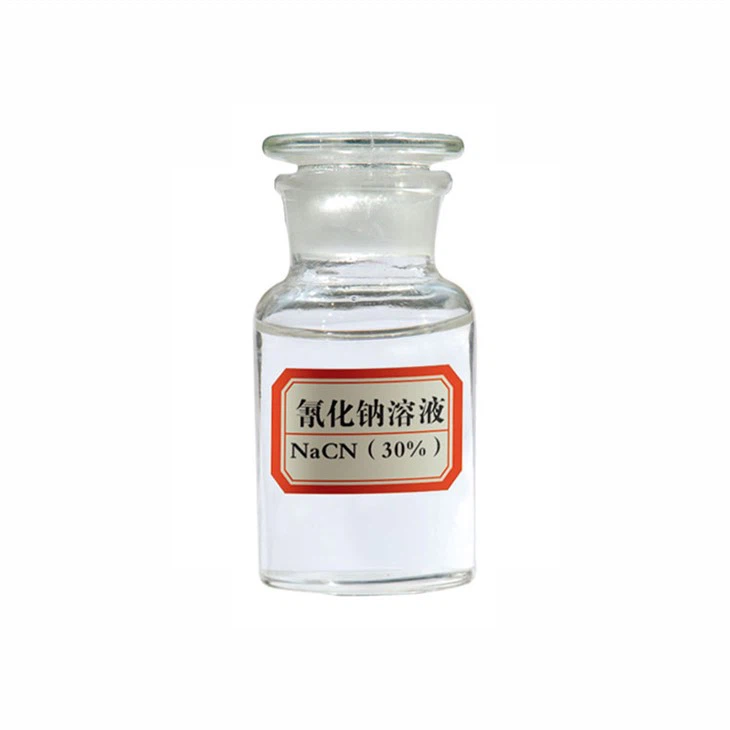
In addition to potassium cyanide, sodium cyanide (Sodium Cyanide [/gold - extraction/leaching - agent/sodium - cyanide.html]) and sodium cyanide solution (Sodium Cyanide Solution [/gold - extraction/leaching - agent/sodium - cyanide - solution.html]) are also commonly used in industrial applications. Sodium cyanide has similar reactivity to potassium cyanide towards aldehydes. However, the choice between these compounds may depend on factors such as cost, solubility, and specific application requirements. Potassium cyanide (Potassium Cyanide [/gold - extraction/leaching - agent/potassium - cyanide.html]) is often preferred in some cases due to its higher solubility in certain solvents.
Conclusion
The reaction between KCN and aldehydes is a fundamental and important reaction in organic chemistry. It provides a useful method for the synthesis of cyanohydrins, which have a wide range of applications in various industries. As a KCN supplier, I am committed to providing high - quality potassium cyanide products while ensuring strict safety standards. If you are interested in purchasing potassium cyanide for your industrial or research needs, please feel free to contact us for procurement discussions. We can provide you with detailed product information and guidance on safe handling and usage.
References
- March, J. (1992). Advanced Organic Chemistry: Reactions, Mechanisms, and Structure (4th ed.). Wiley - Interscience.
- Carey, F. A., & Sundberg, R. J. (2007). Advanced Organic Chemistry Part A: Structure and Mechanisms (5th ed.). Springer.
- Vogel, A. I. (1989). Vogel's Textbook of Practical Organic Chemistry (5th ed.). Longman Scientific & Technical.