

How does KCN react with gold - containing compounds?
Hey there! As a supplier of Potassium Cyanide (KCN), I often get asked about how KCN reacts with gold - containing compounds. It's a super interesting topic, especially in the gold extraction industry. So, let's dive right in and explore this chemical reaction.
The Basics of Gold and KCN
First off, gold is a pretty unreactive metal. It's one of the reasons why it's so valuable and used in jewelry and currency for ages. But when it comes to extracting gold from its ores, we need to find a way to make it react. That's where KCN comes in.
Potassium Cyanide is a powerful chemical. It's a white, crystalline solid that's highly soluble in water. When dissolved in water, it forms a solution that can react with gold - containing compounds. You can learn more about Potassium Cyanide on our website.
The Reaction Mechanism
The reaction between KCN and gold - containing compounds is based on the principle of complex formation. Gold in its native form (Au) or in gold - bearing ores reacts with KCN in the presence of oxygen and water. The overall reaction can be represented by the following equation:
4Au + 8KCN + O₂+ 2H₂O → 4KAu(CN)₂+ 4KOH
Let's break this down step by step.
Step 1: Dissociation of KCN
When KCN is dissolved in water, it dissociates into potassium ions (K⁺) and cyanide ions (CN⁻). The cyanide ions are the key players in this reaction.
KCN → K⁺+ CN⁻
Step 2: Oxidation of Gold
In the presence of oxygen from the air, gold atoms are oxidized. Oxygen acts as an oxidizing agent, taking electrons from the gold atoms.
4Au → 4Au⁺+ 4e⁻
O₂+ 2H₂O + 4e⁻ → 4OH⁻

Step 3: Complex Formation
The oxidized gold ions (Au⁺) react with the cyanide ions (CN⁻) to form a stable complex ion called dicyanoaurate(I) ion [Au(CN)₂]⁻.
Au⁺+ 2CN⁻ → [Au(CN)₂]⁻
The potassium ions (K⁺) from the dissociation of KCN then combine with the [Au(CN)₂]⁻ ions to form potassium dicyanoaurate(I) (KAu(CN)₂), which is soluble in water.
K⁺+ [Au(CN)₂]⁻ → KAu(CN)₂
This soluble complex allows the gold to be separated from the ore matrix. After the reaction, the gold - containing solution can be further processed to recover the gold.
Why Use KCN in Gold Extraction?
You might be wondering why we use KCN for gold extraction. Well, there are a few reasons.
- Selectivity: KCN is highly selective for gold. It reacts preferentially with gold in the presence of other metals in the ore. This means that we can target gold specifically and separate it from other minerals.
- Efficiency: The reaction with KCN is relatively fast and efficient. It can extract a high percentage of gold from the ore in a reasonable amount of time.
- Solubility: The complex formed (KAu(CN)₂) is highly soluble in water. This makes it easy to separate the gold - containing solution from the solid ore residue.
Other Cyanide Compounds in Gold Extraction
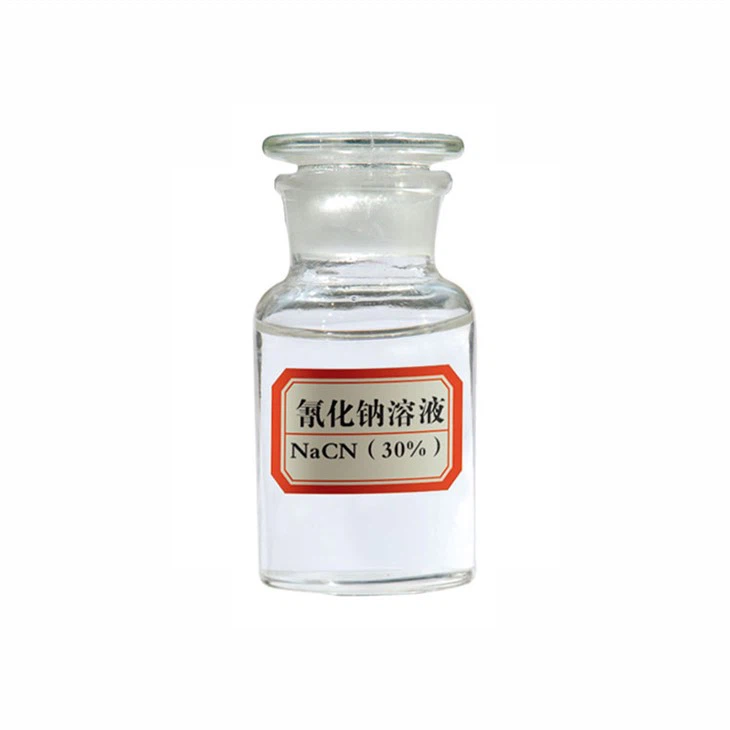
Apart from KCN, sodium cyanide (NaCN) is also commonly used in gold extraction. Sodium cyanide is similar to KCN in its reactivity with gold - containing compounds. The reaction with sodium cyanide can be represented by a similar equation:
4Au + 8NaCN + O₂+ 2H₂O → 4NaAu(CN)₂+ 4NaOH
You can find more information about Sodium Cyanide and Sodium Cyanide Solution on our website.
Safety Considerations
It's important to note that both KCN and NaCN are extremely toxic substances. They can be harmful if inhaled, ingested, or absorbed through the skin. When handling these chemicals, strict safety protocols must be followed. This includes wearing appropriate personal protective equipment (PPE), working in well - ventilated areas, and having proper waste disposal procedures.
Applications in the Gold Industry
The reaction between KCN and gold - containing compounds is the foundation of the cyanide leaching process, which is widely used in the gold mining industry. This process is used to extract gold from low - grade ores, where other methods might not be as effective.
In large - scale mining operations, the ore is crushed and then mixed with a KCN solution in large tanks. The solution is continuously aerated to provide the necessary oxygen for the reaction. After the reaction is complete, the gold - containing solution is separated from the solid residue and further processed to recover the gold.
Our Role as a KCN Supplier
As a supplier of KCN, we play a crucial role in the gold extraction industry. We ensure that our customers receive high - quality KCN that meets their specific requirements. We also provide technical support and guidance on the proper use of KCN in gold extraction processes.
If you're in the gold extraction business and are looking for a reliable KCN supplier, we'd love to hear from you. Whether you need a small quantity for a research project or a large amount for a commercial mining operation, we've got you covered. We can work with you to understand your needs and provide the best solutions.
Conclusion
The reaction between KCN and gold - containing compounds is a fascinating chemical process that has revolutionized the gold extraction industry. By understanding the reaction mechanism, we can optimize the extraction process and improve the efficiency of gold recovery.
If you have any questions about how KCN reacts with gold - containing compounds or if you're interested in purchasing KCN for your gold extraction needs, don't hesitate to reach out. We're here to help you make the most of this powerful chemical in your operations.
References
- "Principles of Extractive Metallurgy" by W. G. Davenport, et al.
- "Hydrometallurgy: Fundamentals and Applications" by D. B. Dreisinger.