

How does NaCN react with halogens?
As a supplier of NaCN, I've had numerous inquiries about its chemical reactions, especially with halogens. In this blog post, I'll delve into the fascinating world of how sodium cyanide (NaCN) reacts with different halogens, exploring the underlying chemistry, products formed, and practical applications.
Understanding Sodium Cyanide
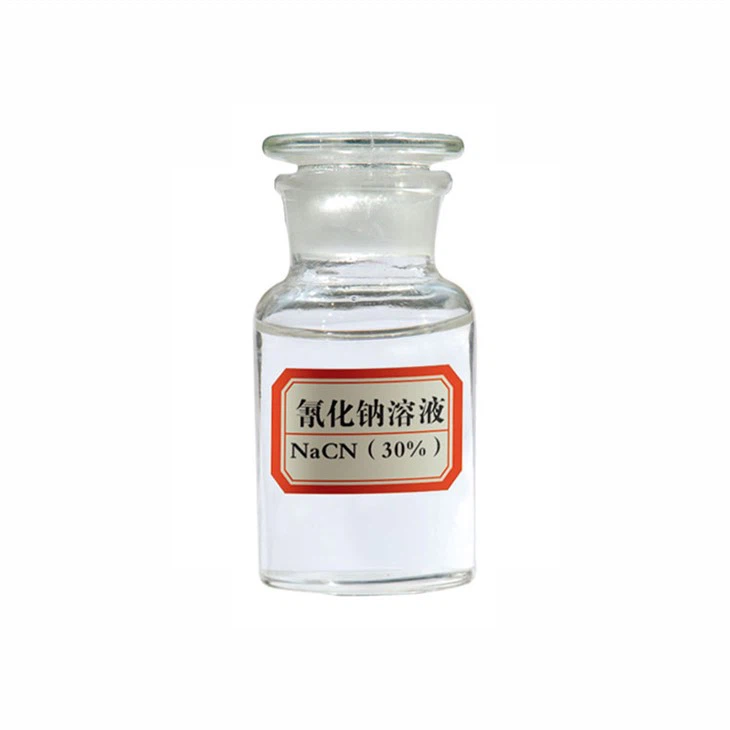
Before we jump into the reactions with halogens, let's briefly understand sodium cyanide. Sodium cyanide is a highly toxic, white crystalline solid with the chemical formula NaCN. It is soluble in water and is widely used in various industries, including gold extraction, electroplating, and organic synthesis. You can learn more about Sodium Cyanide on our website.
General Reaction Mechanism
The reaction between NaCN and halogens generally involves a redox reaction. Halogens are strong oxidizing agents, and cyanide ions ($CN^-$) can act as reducing agents. The general reaction can be represented as follows:
[2NaCN + X_2 \rightarrow 2NaX+ (CN)_2]
where (X_2) represents a halogen molecule ((F_2), (Cl_2), (Br_2), or (I_2)), and ((CN)_2) is cyanogen, a highly toxic and reactive gas.
Reaction with Fluorine ((F_2))
Fluorine is the most electronegative and reactive halogen. When sodium cyanide reacts with fluorine, the reaction is extremely vigorous and potentially explosive. The reaction proceeds as follows:
[2NaCN + F_2 \rightarrow 2NaF+(CN)_2]
The reaction releases a large amount of energy due to the high reactivity of fluorine. Cyanogen gas is produced, which is highly toxic and can pose significant safety risks. Special precautions must be taken when handling this reaction, including working in a well - ventilated area and using appropriate personal protective equipment.
Reaction with Chlorine ((Cl_2))
The reaction between sodium cyanide and chlorine is also a redox reaction. Chlorine is a strong oxidizing agent, and it oxidizes the cyanide ions.
[2NaCN + Cl_2 \rightarrow 2NaCl+(CN)_2]
This reaction is often used in wastewater treatment to remove cyanide from industrial effluents. By adding chlorine to a solution containing sodium cyanide, the cyanide is converted to less toxic products. However, the production of cyanogen gas still requires careful handling. In some cases, further treatment is needed to decompose the cyanogen gas to prevent its release into the environment.
Reaction with Bromine ((Br_2))
Similar to chlorine, bromine reacts with sodium cyanide to produce sodium bromide and cyanogen gas.
[2NaCN + Br_2 \rightarrow 2NaBr+(CN)_2]
The reaction with bromine is less vigorous than with fluorine but more so than with iodine. Bromine is a liquid at room temperature, which makes it easier to handle compared to fluorine gas. This reaction can also be used in chemical synthesis to introduce cyanide groups into organic molecules, although the toxicity of cyanogen gas remains a concern.
Reaction with Iodine ((I_2))
Iodine is the least reactive of the common halogens. The reaction between sodium cyanide and iodine is relatively slow compared to the reactions with fluorine, chlorine, and bromine.
[2NaCN + I_2 \rightarrow 2NaI+(CN)_2]
This reaction can be used in analytical chemistry to determine the concentration of cyanide in a sample. By adding a known amount of iodine to a solution containing sodium cyanide and then titrating the excess iodine, the amount of cyanide can be calculated.
Practical Applications
The reactions of NaCN with halogens have several practical applications:
Gold Extraction
In the gold mining industry, sodium cyanide is used to extract gold from ores. Although the direct reaction with halogens is not typically part of the gold extraction process, the knowledge of these reactions is important for wastewater treatment. After the gold extraction, the cyanide - containing wastewater needs to be treated to remove cyanide before discharge. The reaction with halogens, such as chlorine, can be used to break down the cyanide into less toxic products. You can find more information about Sodium Cyanide Solution for gold extraction on our website.
Organic Synthesis
Cyanogen, the product of the reaction between NaCN and halogens, can be used in organic synthesis to introduce cyanide groups into organic molecules. These cyanide - containing compounds are important intermediates in the synthesis of pharmaceuticals, agrochemicals, and other fine chemicals.
Analytical Chemistry
As mentioned earlier, the reaction with iodine can be used in analytical chemistry to determine the concentration of cyanide in a sample. This is important for environmental monitoring and quality control in industries that use or produce cyanide.

Safety Considerations
It's crucial to emphasize the safety risks associated with these reactions. Cyanide compounds, including sodium cyanide and cyanogen gas, are highly toxic. Exposure to cyanide can cause serious health problems, including respiratory failure, cardiac arrest, and even death. When working with NaCN and halogens, the following safety measures should be taken:
- Proper Ventilation: All reactions should be carried out in a well - ventilated area, preferably in a fume hood, to prevent the accumulation of toxic gases.
- Personal Protective Equipment (PPE): Wear appropriate PPE, such as gloves, goggles, and a lab coat, to protect against contact with the chemicals.
- Training: Only trained personnel should handle these chemicals. They should be familiar with the properties of the chemicals, the reaction mechanisms, and the safety procedures.
- Emergency Response: Have an emergency response plan in place in case of accidental spills or releases. This should include access to first - aid equipment and procedures for dealing with cyanide exposure.
Conclusion
The reactions between sodium cyanide and halogens are complex and have significant practical applications. Whether it's in gold extraction, organic synthesis, or analytical chemistry, understanding these reactions is essential for safe and effective use of these chemicals. As a supplier of NaCN, we are committed to providing high - quality products and ensuring that our customers have the knowledge and resources to handle them safely.
If you're interested in purchasing sodium cyanide or have any questions about its reactions and applications, please don't hesitate to contact us for a detailed discussion. We can provide you with the necessary information and guidance to meet your specific needs.
References
- Atkins, P., & de Paula, J. (2014). Physical Chemistry. Oxford University Press.
- Housecroft, C. E., & Sharpe, A. G. (2012). Inorganic Chemistry. Pearson Education.
- Vogel, A. I. (1978). Vogel's Textbook of Quantitative Inorganic Analysis. Longman.