

How does NaCN react with silver?
Hey there! As a supplier of NaCN (Sodium Cyanide), I've got a ton of knowledge about how it reacts with silver. In this blog, I'll break down the science behind this reaction, explain its real - world applications, and also share some safety tips. So, let's dive right in!
The Reaction Mechanism
When NaCN comes into contact with silver, a complex chemical reaction takes place. The key here is the formation of a soluble complex ion. Silver in its elemental form, or as a silver - containing compound, reacts with NaCN in the presence of oxygen and water.
The overall reaction can be described in the following steps. First, silver reacts with oxygen and water in the presence of NaCN. The cyanide ions (CN⁻) from NaCN play a crucial role. They bind to the silver atoms, forming a stable complex.
The chemical equation for the reaction of silver with NaCN in the presence of oxygen is:
4Ag + 8NaCN+ O₂ + 2H₂O → 4Na[Ag(CN)₂]+ 4NaOH
In this reaction, silver (Ag) reacts with sodium cyanide (NaCN), oxygen (O₂), and water (H₂O). The product is sodium dicyanoargentate(I) [Na(Ag(CN)₂)], which is a soluble complex. This complex is stable and can be easily separated from the other solid materials in a solution.
The formation of this complex is possible because the cyanide ions have a strong affinity for silver ions. The cyanide ions act as ligands, surrounding the silver ion and forming coordinate covalent bonds. This results in a complex with a negative charge, which is then balanced by the sodium ion from NaCN.
Real - World Applications
Silver Extraction
One of the most significant applications of the reaction between NaCN and silver is in the mining and extraction of silver from its ores. Silver ores often contain silver in small amounts, mixed with other minerals. The use of NaCN allows for the selective extraction of silver.
The process starts by crushing the ore into small pieces. Then, the crushed ore is mixed with a solution of NaCN. The silver in the ore reacts with the NaCN solution as described in the chemical equation above, forming the soluble silver - cyanide complex. This solution is then separated from the remaining solid waste, and the silver can be recovered from the complex by various methods, such as precipitation with zinc.
If you're interested in the extraction process and need a reliable source of Sodium Cyanide Solution, check out Sodium Cyanide Solution.
Electroplating
Another important application is in electroplating. Electroplating is a process where a thin layer of metal is deposited onto the surface of another object. In the case of silver electroplating, a solution containing the silver - cyanide complex is used.
The object to be plated is made the cathode in an electrolytic cell, and a silver anode is used. When an electric current is passed through the solution, the silver ions in the silver - cyanide complex are reduced at the cathode and deposited as a thin layer of silver on the object. This process allows for a uniform and high - quality silver coating on various objects, such as jewelry and electronic components.
Safety Considerations
It's important to note that NaCN is a highly toxic substance. When handling NaCN, strict safety precautions must be taken.
Handling
When working with NaCN, it should be stored in a cool, dry place away from acids. Acids can react with NaCN to produce hydrogen cyanide gas (HCN), which is extremely toxic and can be fatal if inhaled.
All personnel handling NaCN should wear appropriate personal protective equipment (PPE), including gloves, goggles, and a respirator. In case of accidental exposure, immediate first - aid measures should be taken, and medical help should be sought.
Disposal
The disposal of NaCN and its waste products must be done in accordance with environmental regulations. Specialized treatment methods are required to neutralize the cyanide and ensure that it does not pose a threat to the environment.
Alternative Cyanide Compounds
While NaCN is widely used, there are also other cyanide compounds that can be used in similar applications. One such compound is Potassium Cyanide (KCN).
Potassium Cyanide has similar chemical properties to NaCN. It can also react with silver to form a soluble silver - cyanide complex. The reaction is similar to that of NaCN, with the potassium ion replacing the sodium ion in the complex.
If you're interested in exploring Potassium Cyanide for your silver - related processes, you can check out Potassium Cyanide.
Our NaCN Products
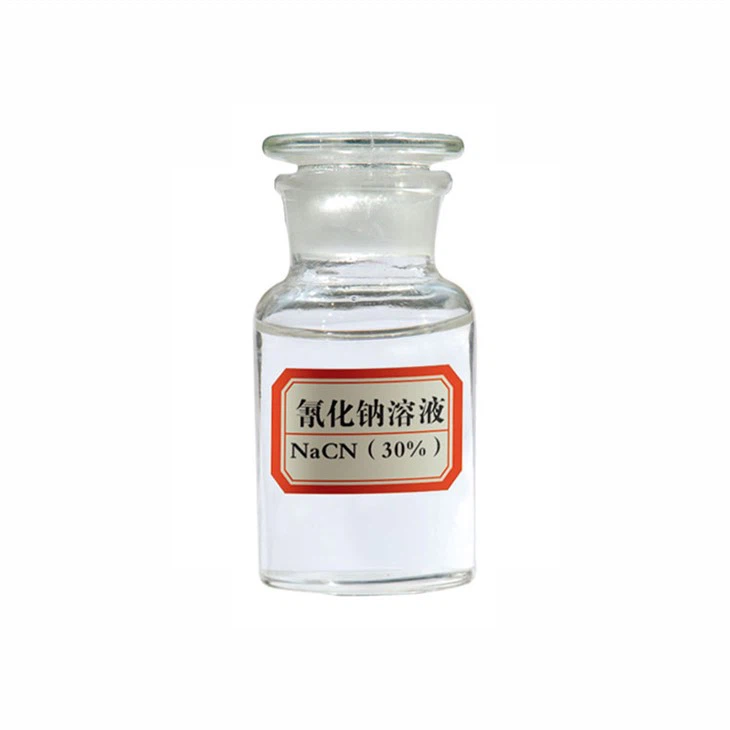
As a NaCN supplier, we offer high - quality Sodium Cyanide products. Our Sodium Cyanide is carefully manufactured to meet the strictest industry standards. Whether you're in the silver extraction business or electroplating industry, our products can provide you with reliable results.
We understand the importance of safety and quality in your operations. That's why we ensure that all our products are properly labeled and come with detailed safety instructions.

Contact for Procurement
If you're interested in purchasing NaCN for your silver - related processes, we'd love to hear from you. We can provide you with the right quantity of high - quality NaCN at competitive prices. Just reach out to us to start the procurement process and discuss your specific requirements.
References
- Atkins, P., & Jones, L. (2016). Chemical Principles: The Quest for Insight. W. H. Freeman and Company.
- Housecroft, C. E., & Sharpe, A. G. (2012). Inorganic Chemistry. Pearson.