

How to find the appropriate contact time for an adsorbent?
Finding the appropriate contact time for an adsorbent is crucial for anyone in the industry, especially for us as an adsorbent supplier. It can significantly impact the efficiency and effectiveness of adsorption processes. In this blog, I'll share some insights on how to figure out that perfect contact time, based on our experience and knowledge of various adsorbents like RMPC1034, RMPC1033, and RPMH 1003.

Understanding Adsorption Basics
First off, let's quickly go over what adsorption is. Adsorption is a process where molecules from a gas or liquid stick to the surface of an adsorbent. This is different from absorption, where the substance gets taken into the bulk of a material. Adsorbents have a large surface area, which allows them to capture a lot of molecules.
The contact time is the period during which the adsorbent and the substance to be adsorbed are in contact. It's super important because if the contact time is too short, the adsorbent won't have enough time to adsorb all the target molecules. On the other hand, if it's too long, it might not be cost - effective, and in some cases, it could even lead to desorption (the release of the adsorbed molecules).
Factors Affecting Contact Time
Nature of the Adsorbent
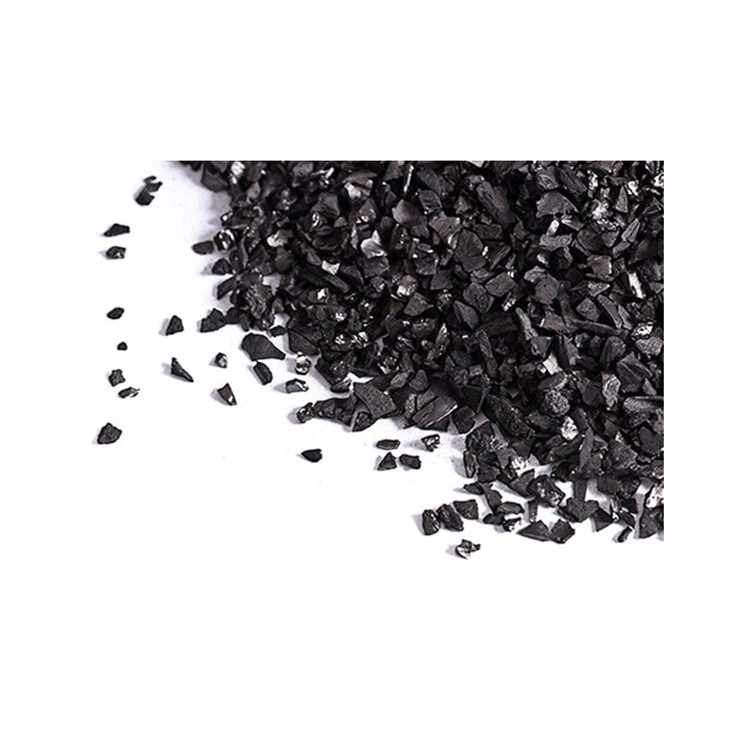
Different adsorbents have different properties. For example, activated carbon is a common adsorbent known for its high porosity and large surface area. It can adsorb a wide range of substances quickly. Our RMPC1034 adsorbent is designed with specific pore sizes and surface characteristics to target certain types of molecules, like those involved in gold extraction. This means that its optimal contact time will be different from other general - purpose adsorbents.
Some adsorbents have a faster adsorption rate due to their chemical composition. For instance, zeolites have a well - defined crystalline structure that allows for selective adsorption. They can adsorb molecules based on their size and shape. The RPMH 1003 adsorbent has unique chemical properties that make it highly effective in certain applications, and understanding its nature is key to determining the right contact time.
Concentration of the Target Substance
The concentration of the substance you want to adsorb plays a big role. If the concentration is high, the adsorbent will start adsorbing molecules at a faster rate initially. But as the adsorbent surface becomes more saturated, the rate will slow down. In a high - concentration solution, you might need a longer contact time to ensure that most of the target molecules are adsorbed.
Let's say you're using our RMPC1033 adsorbent to remove impurities from a gold - containing solution. If the impurity concentration is high, you'll have to let the adsorbent sit in the solution for a longer time compared to a low - concentration solution.
Temperature and Pressure
Temperature and pressure can also affect the adsorption process. Generally, an increase in temperature can increase the kinetic energy of the molecules, which might speed up the adsorption rate. However, for some adsorbents, high temperatures can cause desorption. So, you need to find the right balance.
Pressure can also influence adsorption. In gas - phase adsorption, increasing the pressure can force more gas molecules onto the adsorbent surface. But again, this depends on the type of adsorbent and the target gas.
Methods to Determine Contact Time
Batch Experiments
One of the simplest ways to find the appropriate contact time is through batch experiments. In a batch experiment, you take a known amount of adsorbent and add it to a known volume of the solution or gas containing the target substance. You then stir or agitate the mixture for different time intervals.
After each time interval, you analyze the remaining concentration of the target substance in the solution or gas. You can plot a graph of the adsorption capacity (the amount of substance adsorbed per unit mass of adsorbent) against the contact time. The point where the adsorption capacity reaches a plateau is a good indication of the optimal contact time.
For example, if you're testing our RMPC1034 adsorbent in a batch experiment for gold extraction, you'll start seeing that after a certain time, the amount of gold adsorbed doesn't increase significantly. That's when you know you've found the right contact time for that particular setup.
Column Experiments
Column experiments are more representative of real - world continuous processes. In a column experiment, you pack the adsorbent into a column and pass the solution or gas through it at a constant flow rate. You collect samples at different points along the column and at different time intervals.
By analyzing the concentration of the target substance in the effluent (the fluid that comes out of the column), you can determine how long it takes for the adsorbent in the column to reach its maximum adsorption capacity. This method takes into account factors like flow dynamics and mass transfer, which are important in large - scale applications.
Case Studies
Let's look at a couple of case studies to see how these methods work in practice.
Gold Extraction with RMPC1034
A mining company was using our RMPC1034 adsorbent to extract gold from a leach solution. They first conducted batch experiments to get a rough idea of the contact time. They found that after about 2 hours of contact, the adsorption capacity started to level off.
Then, they did a column experiment to simulate their continuous extraction process. They found that with a certain flow rate, the optimal contact time in the column was around 3 hours. This longer contact time was due to the more complex flow and mass - transfer conditions in the column.
Impurity Removal with RMPC1033
Another client was using our RMPC1033 adsorbent to remove impurities from a chemical solution. In their batch experiments, they noticed that the optimal contact time was 1.5 hours. But when they scaled up to a continuous process using a column, they had to adjust the contact time to 2 hours to achieve the same level of impurity removal.
Importance of Finding the Right Contact Time
Finding the appropriate contact time is not just about getting the best adsorption results. It also has economic and environmental implications.
From an economic perspective, if you use too much contact time, you're wasting resources like energy (for agitation or heating) and time. On the other hand, if the contact time is too short, you might not achieve the desired level of purification or extraction, which could lead to losses in the production process.
Environmentally, using the right contact time means you're using the adsorbent more efficiently. This reduces the amount of waste generated and the need for additional treatment steps.
Conclusion
Figuring out the appropriate contact time for an adsorbent is a multi - faceted process. It involves understanding the nature of the adsorbent, the concentration of the target substance, and the influence of temperature and pressure. By using methods like batch and column experiments, you can get a good estimate of the optimal contact time.
If you're in the market for high - quality adsorbents like RMPC1034, RMPC1033, or RPMH 1003, and need help with determining the right contact time for your specific application, don't hesitate to reach out. We're here to provide you with the best solutions and support to make your adsorption processes as efficient as possible.
References
- "Adsorption Technology and Design" by Perry's Chemical Engineers' Handbook.
- "Principles of Adsorption and Adsorption Processes" by D. M. Ruthven.