

What are the reactions of KCN with lead - containing compounds?
Potassium cyanide (KCN) is a highly toxic yet industrially important compound. As a supplier of KCN, I've had numerous inquiries regarding its reactions with lead - containing compounds. In this blog, we'll explore the chemical reactions, mechanisms, and implications of these interactions.
Chemical Reactions
When KCN reacts with lead - containing compounds, several types of reactions can occur depending on the form of the lead compound and the reaction conditions.
Reaction with Lead(II) Salts
Let's first consider the reaction between KCN and lead(II) salts such as lead(II) nitrate ($Pb(NO_3)_2$). In an aqueous solution, the cyanide ions ($CN^-$) from KCN can react with lead(II) ions ($Pb^{2 +}$).
The reaction can be represented by the following chemical equation:
$Pb(NO_3)_2+2KCN = Pb(CN)_2\downarrow+2KNO_3$
Lead(II) cyanide ($Pb(CN)_2$) is a sparingly soluble compound that precipitates out of the solution. This precipitation reaction is a typical example of a double - displacement reaction, where the cations and anions of the two reactants exchange partners.
The formation of $Pb(CN)2$ is due to the strong affinity between $Pb^{2+}$ and $CN^-$ ions. The cyanide ions act as ligands and form coordinate bonds with the lead(II) ions. The solubility product constant ($K{sp}$) of $Pb(CN)_2$ is relatively small, which means that even a small amount of $Pb^{2+}$ and $CN^-$ ions in solution can lead to the precipitation of $Pb(CN)_2$.
Complexation Reactions
Under certain conditions, further reactions can occur between $Pb(CN)_2$ and excess KCN. The excess cyanide ions can form complex ions with the lead(II) ions. The general reaction for the formation of a lead - cyanide complex can be written as:
$Pb(CN)_2 + 2KCN=K_2[Pb(CN)_4]$
In this reaction, the lead(II) cyanide reacts with two moles of potassium cyanide to form a soluble potassium tetracyanoplumbate(II) complex. The complex ion $[Pb(CN)_4]^{2 -}$ is a stable species in solution, and its formation is favored by the presence of excess cyanide ions.
Reaction Mechanisms
The reaction between KCN and lead - containing compounds involves both ionic and coordination chemistry.
Ionic Dissociation
When KCN is dissolved in water, it dissociates into potassium ions ($K^+$) and cyanide ions ($CN^-$):
$KCN\rightarrow K^++CN^-$
Similarly, a lead(II) salt such as $Pb(NO_3)_2$ dissociates into lead(II) ions and nitrate ions:
$Pb(NO_3)_2\rightarrow Pb^{2 +}+2NO_3^-$
The free $CN^-$ and $Pb^{2+}$ ions in solution then interact with each other. The electrostatic attraction between the positively charged $Pb^{2+}$ ions and the negatively charged $CN^-$ ions leads to the formation of the $Pb(CN)_2$ precipitate.
Coordination Bond Formation
In the formation of the $[Pb(CN)_4]^{2 -}$ complex, the cyanide ions act as Lewis bases, donating a pair of electrons to the lead(II) ion, which acts as a Lewis acid. The lead(II) ion has empty orbitals that can accept the electron pairs from the cyanide ions, forming coordinate covalent bonds.
The coordination number of lead in the $[Pb(CN)_4]^{2 -}$ complex is 4, which means that the lead(II) ion is surrounded by four cyanide ligands in a tetrahedral geometry.
Industrial and Environmental Implications
Industrial Applications
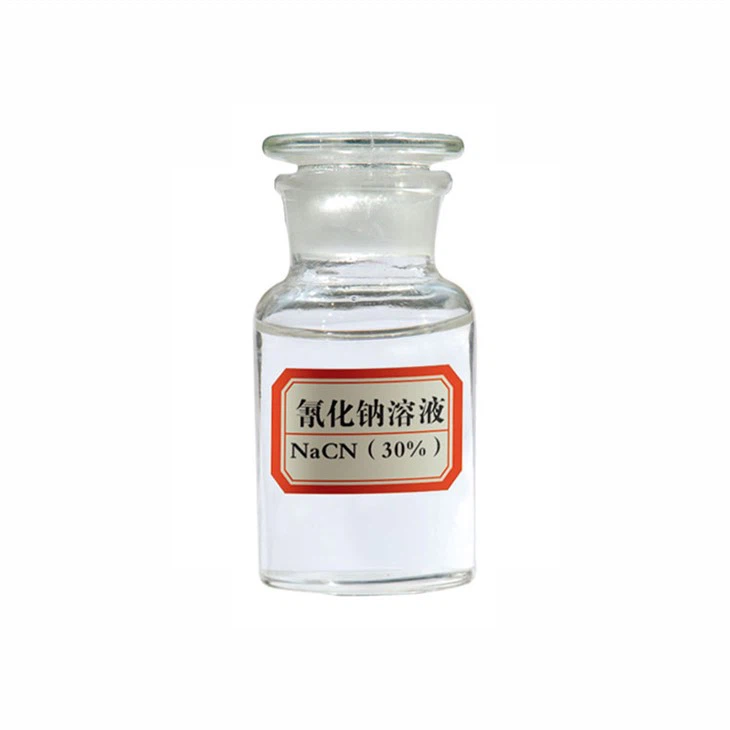
The reactions between KCN and lead - containing compounds have some industrial applications. In the mining industry, cyanide compounds such as Potassium Cyanide and Sodium Cyanide are used for the extraction of precious metals. Although lead is not a precious metal, the understanding of these reactions can be useful in the separation and purification processes.
For example, in some ore - processing operations, lead impurities may be present in the ore. By using cyanide solutions, the lead can be selectively removed as a lead - cyanide complex or precipitate, which can then be separated from the valuable metals.
Environmental Concerns
However, the use of KCN in industrial processes also raises significant environmental concerns. Cyanide is highly toxic to living organisms, and any release of cyanide - containing waste into the environment can have serious consequences.
If lead - cyanide complexes or precipitates are not properly managed, they can pose a long - term threat to the environment. For example, if the lead - cyanide waste is dumped in landfills, the cyanide can leach out over time and contaminate groundwater.
In addition, the formation of lead - cyanide compounds can also affect the bioavailability of lead in the environment. The lead - cyanide complexes may be more mobile in the environment than free lead ions, which can increase the risk of lead exposure to living organisms.
Safety Considerations
As a supplier of KCN, safety is of utmost importance. KCN is a highly toxic substance, and proper handling and storage procedures must be followed.
When dealing with the reactions between KCN and lead - containing compounds, it is essential to wear appropriate personal protective equipment (PPE), such as gloves, goggles, and a respirator. The reactions should be carried out in a well - ventilated area, preferably in a fume hood, to prevent the inhalation of toxic cyanide vapors.
In case of accidental spills or releases, emergency response procedures should be in place. The spilled KCN should be neutralized immediately using appropriate chemicals, and the contaminated area should be thoroughly cleaned.

Conclusion
The reactions between KCN and lead - containing compounds are complex and involve both precipitation and complexation reactions. These reactions have important industrial applications, but they also pose significant environmental and safety concerns.
As a KCN supplier, we are committed to providing high - quality products and ensuring that our customers are well - informed about the proper use and handling of KCN. If you are interested in purchasing KCN for your industrial processes or have any questions about its reactions with lead - containing compounds, please feel free to contact us for further discussion and procurement negotiations.
References
- Atkins, P., & de Paula, J. (2006). Physical Chemistry. Oxford University Press.
- Housecroft, C. E., & Sharpe, A. G. (2008). Inorganic Chemistry. Pearson Education.
- Skoog, D. A., West, D. M., Holler, F. J., & Crouch, S. R. (2004). Fundamentals of Analytical Chemistry. Thomson Brooks/Cole.