

What are the reactions of KCN with nickel - containing compounds?
Hey there! As a supplier of Potassium Cyanide (KCN), I've been getting a lot of questions lately about its reactions with nickel - containing compounds. So, I thought I'd dive deep into this topic and share some insights with you all.
First off, let's talk a bit about KCN itself. Potassium Cyanide is a highly toxic but extremely useful chemical. If you want to know more about it, you can check out Potassium Cyanide. It's commonly used in gold extraction, electroplating, and even in some organic synthesis processes. But today, we're focusing on its interaction with nickel - containing compounds.
Nickel is a transition metal that forms various compounds with different oxidation states. When KCN comes into contact with nickel - containing compounds, some pretty interesting chemical reactions can occur.
One of the most well - known reactions is the formation of nickel cyanide complexes. When KCN reacts with nickel salts, like nickel(II) chloride (NiCl₂), in an aqueous solution, a complex formation reaction takes place. The cyanide ions (CN⁻) from KCN act as ligands and coordinate with the nickel ions (Ni²⁺). The general reaction can be written as:
NiCl₂ + 4KCN → K₂[Ni(CN)₄] + 2KCl
In this reaction, four cyanide ions bind to a single nickel(II) ion to form the tetracyanonickelate(II) complex ion, [Ni(CN)₄]²⁻. The potassium ions (K⁺) balance the negative charge of the complex. This complex is quite stable due to the strong bonding between the cyanide ligands and the nickel ion. The cyanide ligands donate electron pairs to the empty orbitals of the nickel ion, forming coordinate covalent bonds.
The formation of these nickel cyanide complexes has several practical applications. In electroplating, for example, nickel cyanide complexes are used to deposit a smooth and uniform layer of nickel on a substrate. The complex provides a controlled release of nickel ions during the electroplating process, ensuring a high - quality coating.
Another aspect to consider is the redox reactions that can occur between KCN and nickel - containing compounds. Under certain conditions, nickel can undergo oxidation or reduction reactions when in the presence of cyanide ions. For instance, if we have a nickel(III) compound reacting with KCN, the cyanide ions might reduce the nickel(III) to nickel(II) while getting oxidized themselves. However, these redox reactions are often more complex and depend on factors such as pH, temperature, and the concentration of the reactants.
It's also important to note that the reaction of KCN with nickel - containing compounds can be affected by the presence of other substances. For example, if there are other metal ions in the solution, they might compete with nickel ions for the cyanide ligands. This can lead to the formation of mixed - metal cyanide complexes or affect the rate and extent of the nickel - cyanide complex formation.
Now, let's compare KCN with some other cyanide - based compounds. Sodium Cyanide (NaCN) is another commonly used cyanide compound. You can learn more about it at Sodium Cyanide. Both KCN and NaCN have similar chemical properties when it comes to reacting with nickel - containing compounds. They both can form cyanide complexes with nickel ions. However, there are some differences in their physical and chemical characteristics. KCN is generally more soluble in water compared to NaCN, which can affect the reaction kinetics.
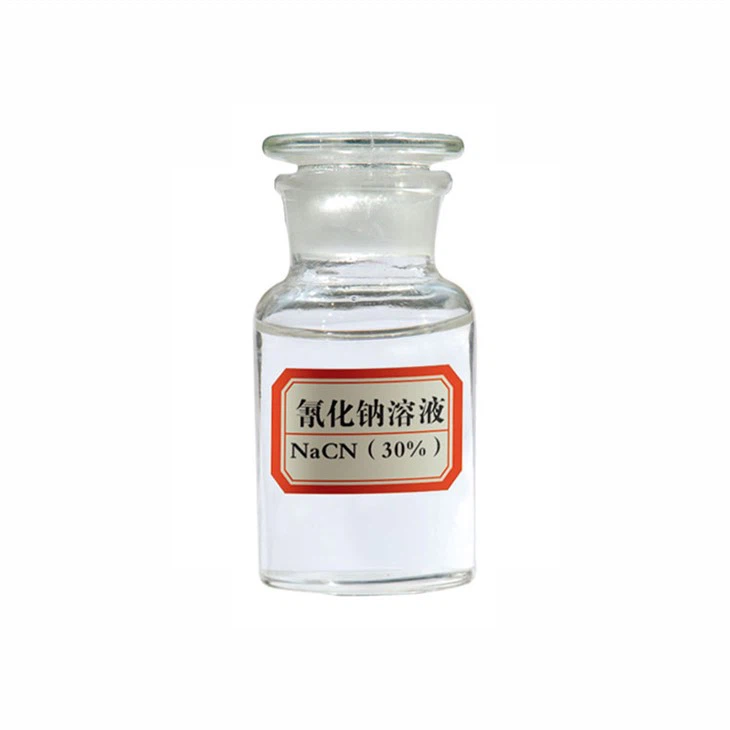
Sodium Cyanide Solution is also an option in some applications. You can find more details about it at Sodium Cyanide Solution. Using a pre - made solution can simplify the reaction setup, especially in industrial processes. But when it comes to reactions with nickel - containing compounds, the active ingredient is still the cyanide ion, so the basic reaction principles remain the same.
When handling the reactions between KCN and nickel - containing compounds, safety is of utmost importance. Both KCN and the resulting nickel cyanide complexes are highly toxic. Proper safety measures, such as wearing protective clothing, using fume hoods, and following strict handling procedures, must be in place. Any waste generated from these reactions should be disposed of properly to prevent environmental contamination.
If you're in an industry that involves working with nickel - containing compounds and you think KCN could be a useful reagent for your processes, I'd love to talk to you. Whether you're in electroplating, mining, or chemical synthesis, having the right supply of high - quality KCN is crucial. I can offer you a reliable source of KCN that meets all the necessary safety and quality standards.

So, if you're interested in learning more about how KCN can work for your specific needs or if you want to start a procurement discussion, don't hesitate to reach out. I'm here to help you find the best solutions for your business.
References
- Housecroft, C. E., & Sharpe, A. G. (2012). Inorganic Chemistry. Pearson Education.
- Cotton, F. A., Wilkinson, G., Murillo, C. A., & Bochmann, M. (1999). Advanced Inorganic Chemistry. Wiley - Interscience.