

What are the reactions of KCN with silver - containing compounds?
Hey there! As a supplier of Potassium Cyanide (KCN), I often get asked about its reactions with silver - containing compounds. It's a topic that's not only interesting from a scientific perspective but also has some practical applications in various industries. So, let's dive right in!
The Basics of KCN and Silver - containing Compounds
First off, let's talk a bit about what KCN is. Potassium Cyanide is a highly toxic yet very useful chemical. You can find more info about it on our Potassium Cyanide page. It's a white crystalline solid that's soluble in water. On the other hand, silver - containing compounds come in many forms. Silver can exist as silver salts like silver chloride (AgCl), silver nitrate (AgNO₃), or in its elemental form as part of an alloy.
Reactions with Silver Chloride (AgCl)
One of the most common silver - containing compounds is silver chloride. When KCN reacts with AgCl, a very interesting thing happens. The cyanide ions (CN⁻) from KCN react with the silver ions (Ag⁺) in AgCl. The reaction can be represented by the following equation:
AgCl(s) + 2KCN(aq) → KAg(CN)₂ + KCl(aq)
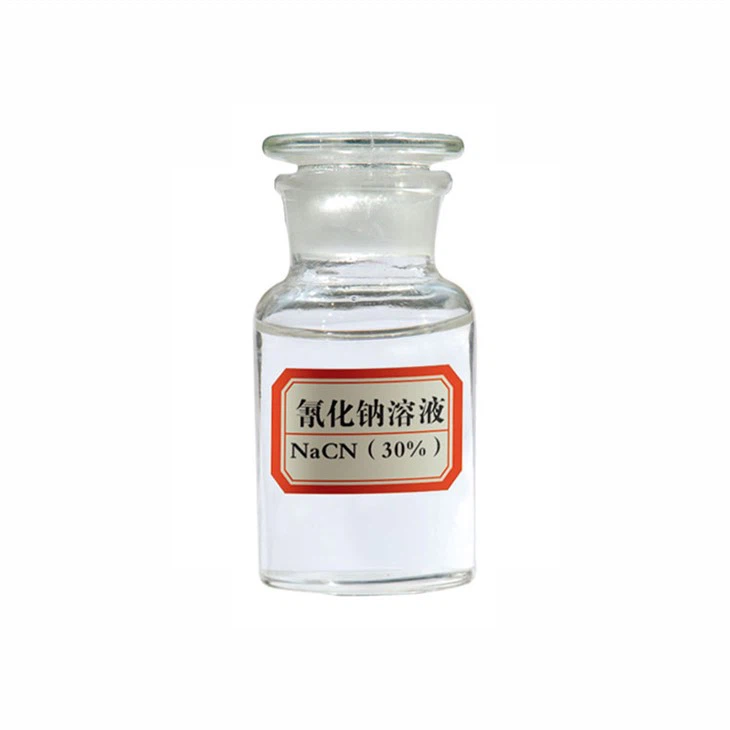
In simple terms, the solid silver chloride dissolves in the potassium cyanide solution. This is because the cyanide ions form a complex ion with the silver ions, called the dicyanoargentate(I) ion, [Ag(CN)₂]⁻. This complex ion is very stable in solution, which drives the reaction forward. This reaction is often used in the extraction of silver from its ores. If you're into gold and silver extraction, you might also be interested in Sodium Cyanide and Sodium Cyanide Solution, which are also important leaching agents in the mining industry.
Reactions with Silver Nitrate (AgNO₃)
Another common silver - containing compound is silver nitrate. When KCN is added to a solution of AgNO₃, a similar complex - forming reaction occurs. The reaction equation is:
AgNO₃(aq) + 2KCN(aq) → KAg(CN)₂ + KNO₃(aq)
Just like with AgCl, the cyanide ions from KCN react with the silver ions from AgNO₃ to form the [Ag(CN)₂]⁻ complex ion. This reaction is often used in analytical chemistry to detect the presence of silver ions in a solution. If you add KCN to a solution suspected of containing silver ions and a clear solution forms, it's a good indication that silver ions are present.

Practical Applications
The reactions of KCN with silver - containing compounds have several practical applications. In the mining industry, as I mentioned earlier, these reactions are used for silver extraction. The ability of KCN to dissolve silver compounds allows miners to separate silver from other minerals in the ore.
In the jewelry industry, these reactions are used for silver plating. By using a solution of the [Ag(CN)₂]⁻ complex ion, jewelers can deposit a thin layer of silver onto other metals. This gives the jewelry a shiny silver appearance at a lower cost.
Safety Considerations
It's important to note that KCN is extremely toxic. When handling KCN, proper safety precautions must be taken. This includes wearing protective clothing, gloves, and working in a well - ventilated area. Any waste solutions containing KCN should be disposed of properly to avoid environmental contamination.
Why Choose Our KCN?
As a KCN supplier, we take pride in providing high - quality potassium cyanide. Our product is carefully manufactured to meet the highest standards. We understand the importance of these reactions in various industries, and we're committed to providing you with a reliable source of KCN. Whether you're in the mining, jewelry, or analytical chemistry industry, our KCN can help you achieve your goals.
If you're interested in purchasing KCN for your business, we'd love to have a chat with you. Our team of experts can answer any questions you might have about the product, its reactions, or its applications. Don't hesitate to reach out to us for a quote or to discuss your specific needs.
References
- Atkins, P., & de Paula, J. (2014). Physical Chemistry. Oxford University Press.
- Housecroft, C. E., & Sharpe, A. G. (2012). Inorganic Chemistry. Pearson Education.
- Miessler, G. L., Fischer, P. J., & Tarr, D. A. (2014). Inorganic Chemistry. Pearson Education.