

What is the chemical structure of KCN?
Hey there! As a supplier of KCN, I often get asked about the chemical structure of potassium cyanide (KCN). So, let's dive right into it and break down what makes up this compound.

First off, let's talk about the basics. KCN is an inorganic compound, and it's made up of three different elements: potassium (K), carbon (C), and nitrogen (N). Each element plays a crucial role in the overall structure and properties of the compound.
Let's start with potassium. Potassium is an alkali metal, which means it's highly reactive. It has one valence electron in its outermost shell, and it really wants to get rid of that electron to achieve a stable electron configuration. When potassium reacts with other elements, it usually loses that electron and forms a positively charged ion, or cation. In the case of KCN, potassium loses its valence electron and becomes a K⁺ ion.
Next up is carbon. Carbon is a non - metal, and it's known for its ability to form a wide variety of compounds due to its unique bonding properties. Carbon has four valence electrons, and it can share these electrons with other atoms to form covalent bonds. In KCN, carbon forms a triple bond with nitrogen.
Nitrogen is also a non - metal. It has five valence electrons, and it needs three more electrons to achieve a stable octet configuration. In KCN, nitrogen forms a triple bond with carbon, sharing three pairs of electrons. This triple bond is very strong and gives the cyanide ion (CN⁻) its characteristic stability and reactivity.
The chemical formula of potassium cyanide, KCN, tells us that one potassium ion (K⁺) is combined with one cyanide ion (CN⁻). The cyanide ion is a polyatomic ion with a negative charge of - 1. The potassium ion, with a positive charge of + 1, balances out the negative charge of the cyanide ion, resulting in a neutral compound.
In terms of the actual structure, the K⁺ ion and the CN⁻ ion are held together by an ionic bond. Ionic bonds are formed when there is a transfer of electrons between a metal and a non - metal. In this case, potassium donates an electron to the cyanide group, creating an electrostatic attraction between the positively charged potassium ion and the negatively charged cyanide ion.
The cyanide ion itself has a linear structure. The carbon and nitrogen atoms are connected by a triple bond, and the molecule is arranged in a straight line. This linear structure gives the cyanide ion certain properties, such as its ability to act as a strong ligand in coordination chemistry.
Now, let's talk about some of the applications of KCN. One of the most well - known uses of potassium cyanide is in gold extraction. Potassium Cyanide is used as a leaching agent to dissolve gold from ores. In this process, the cyanide ions react with the gold to form a soluble complex, which can then be separated from the ore.
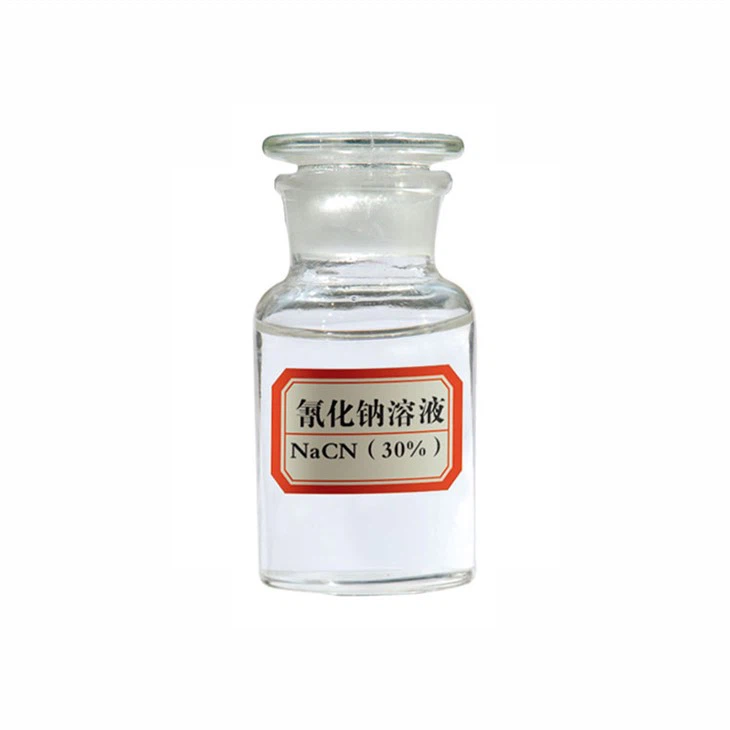
Another related compound is Sodium Cyanide. Sodium cyanide (NaCN) has a similar chemical structure to potassium cyanide. Just like KCN, it consists of a metal ion (sodium, Na⁺) and a cyanide ion (CN⁻). Sodium cyanide is also widely used in gold extraction and other industrial processes.
Sodium Cyanide Solution is often used in place of solid sodium cyanide because it's easier to handle and transport. The solution contains dissolved sodium cyanide, which dissociates into sodium ions and cyanide ions in water.
It's important to note that both potassium cyanide and sodium cyanide are extremely toxic substances. They work by inhibiting the enzyme cytochrome c oxidase in the mitochondria of cells, which prevents the cells from using oxygen. This can lead to rapid cell death and, ultimately, death of the organism. So, when handling these compounds, strict safety protocols must be followed.
As a KCN supplier, I understand the importance of providing high - quality products and ensuring that they are used safely. We have a team of experts who can provide technical support and guidance on the proper use and handling of potassium cyanide.
If you're in the market for potassium cyanide or related products, whether it's for gold extraction or other industrial applications, I'd love to have a chat with you. We can discuss your specific needs, the quantity you require, and the best way to ensure the safe and efficient use of our products.
In conclusion, the chemical structure of potassium cyanide is a combination of a potassium ion and a cyanide ion, held together by an ionic bond. The cyanide ion itself has a linear structure with a triple bond between carbon and nitrogen. This unique structure gives KCN its characteristic properties and makes it useful in a variety of industrial applications.
So, if you're interested in learning more or if you're ready to start a procurement discussion, don't hesitate to reach out. Let's work together to find the best solution for your business.
References
- Brown, T. L., LeMay, H. E., Bursten, B. E., Murphy, C. J., Woodward, P. M., & Stoltzfus, M. W. (2018). Chemistry: The Central Science. Pearson.
- Housecroft, C. E., & Sharpe, A. G. (2018). Inorganic Chemistry. Pearson.