

How are adsorbents used in the pharmaceutical industry?
Adsorbents play a crucial role in the pharmaceutical industry, offering a wide range of applications that contribute to the production of high - quality drugs and the overall efficiency of pharmaceutical processes. As an adsorbent supplier, I am well - versed in the various ways these materials are utilized in this vital sector.
Purification of Pharmaceutical Raw Materials
One of the primary uses of adsorbents in the pharmaceutical industry is the purification of raw materials. Pharmaceutical raw materials often contain impurities such as heavy metals, organic contaminants, and residual solvents. These impurities can have a significant impact on the quality, safety, and efficacy of the final drug product. Adsorbents can selectively remove these unwanted substances through physical or chemical adsorption mechanisms.
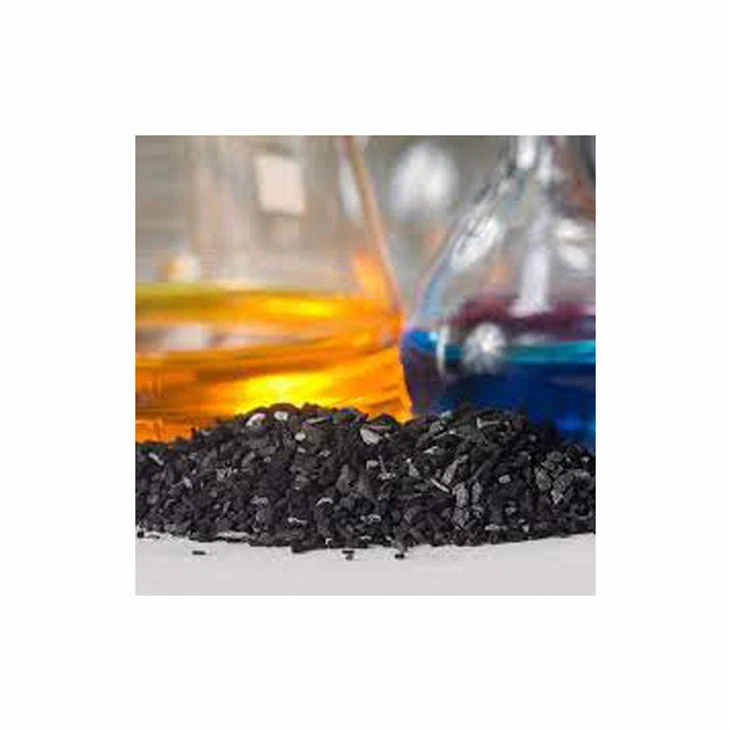
For example, activated carbon is a commonly used adsorbent in raw material purification. It has a large surface area and a porous structure, which allows it to adsorb a wide variety of organic compounds. In the production of antibiotics, activated carbon can be used to remove colored impurities and other organic contaminants from the fermentation broth. This helps to improve the purity and quality of the antibiotic product.
Another type of adsorbent, ion - exchange resins, can be used to remove heavy metals and other ionic impurities from pharmaceutical raw materials. Ion - exchange resins work by exchanging ions with the impurities in the solution. For instance, cation - exchange resins can remove metal cations such as lead, mercury, and cadmium, while anion - exchange resins can remove anionic impurities like chloride and sulfate ions.

Removal of Endotoxins
Endotoxins are lipopolysaccharides found in the outer membrane of Gram - negative bacteria. They can cause serious adverse reactions in patients, such as fever, shock, and even death. Therefore, the removal of endotoxins from pharmaceutical products, especially parenteral drugs (drugs administered by injection), is of utmost importance.
Adsorbents such as polymyxin B - immobilized resins are commonly used for endotoxin removal. Polymyxin B has a high affinity for endotoxins, and by immobilizing it on a resin matrix, the adsorbent can selectively bind and remove endotoxins from solutions. These adsorbents are often used in the purification of injectable drugs, vaccines, and biological products to ensure their safety and quality.
Drug Formulation and Delivery
Adsorbents also play a role in drug formulation and delivery. They can be used to improve the solubility, stability, and bioavailability of drugs. For example, some drugs have poor solubility in water, which can limit their absorption and efficacy. Adsorbents can be used to increase the solubility of these drugs by forming inclusion complexes or by adsorbing the drug molecules on their surface.
Cyclodextrins are a type of adsorbent that are widely used in drug formulation. They are cyclic oligosaccharides with a hydrophobic cavity and a hydrophilic outer surface. The hydrophobic cavity can encapsulate hydrophobic drug molecules, forming inclusion complexes. This not only improves the solubility of the drug but also enhances its stability and bioavailability.
In addition, adsorbents can be used in controlled - release drug delivery systems. For example, porous silica particles can be used as carriers for drugs. The drug molecules can be adsorbed onto the surface or into the pores of the silica particles. The release of the drug from the particles can be controlled by adjusting the properties of the adsorbent, such as the pore size and surface area.
Air and Water Purification in Pharmaceutical Facilities
Maintaining a clean and sterile environment is essential in pharmaceutical manufacturing facilities. Adsorbents are used for air and water purification to remove contaminants and ensure the quality of the production environment.
In air purification, activated carbon filters are commonly used to remove volatile organic compounds (VOCs), odors, and other gaseous contaminants from the air. These filters can be installed in the ventilation systems of pharmaceutical manufacturing plants to provide a clean and safe working environment.
For water purification, adsorbents such as activated alumina and zeolites can be used to remove impurities such as fluoride, arsenic, and heavy metals from water. Purified water is used in various pharmaceutical processes, including drug synthesis, formulation, and cleaning. Ensuring the quality of water is crucial for the production of high - quality pharmaceutical products.
Specific Adsorbents in the Pharmaceutical Industry
As an adsorbent supplier, we offer a range of high - quality adsorbents suitable for the pharmaceutical industry. Two of our notable products are GC E612 and RPMH 1001.
GC E612 is a specially designed adsorbent with a high surface area and excellent adsorption capacity. It is suitable for the purification of various pharmaceutical raw materials and can effectively remove organic contaminants and heavy metals. Its unique pore structure allows for selective adsorption, ensuring the purity of the final product.
RPMH 1001 is another adsorbent that has shown great potential in the pharmaceutical industry. It has a high affinity for endotoxins and can be used for endotoxin removal in parenteral drugs and biological products. Its stable performance and high adsorption efficiency make it a reliable choice for pharmaceutical manufacturers.
We also offer RPMH 1003, which is designed for specific applications in drug formulation. RPMH 1003 can improve the solubility and stability of drugs, making it an ideal choice for formulating drugs with poor solubility.
Conclusion
In conclusion, adsorbents are indispensable in the pharmaceutical industry. They are used in various processes, from raw material purification to drug formulation and delivery, as well as air and water purification in pharmaceutical facilities. As an adsorbent supplier, we are committed to providing high - quality adsorbents that meet the strict requirements of the pharmaceutical industry.
If you are a pharmaceutical manufacturer looking for reliable adsorbents for your production processes, we invite you to contact us for more information and to discuss your specific needs. Our team of experts is ready to assist you in selecting the most suitable adsorbents for your applications and to provide technical support throughout the procurement process.
References
- "Handbook of Pharmaceutical Excipients" by Raymond C. Rowe, Paul J. Sheskey, and Marian E. Quinn.
- "Adsorption Technology and Design" by Douglas M. Ruthven.
- "Pharmaceutical Manufacturing Handbook: Production and Processes" edited by S. C. Gad.