

How does NaCN react with zinc?
Hey there! As a supplier of NaCN (Sodium Cyanide), I often get asked about how it reacts with zinc. It's a pretty interesting topic, especially considering the industrial applications of this reaction. So, let's dive right in and explore the ins and outs of how NaCN and zinc interact.
The Basics of the Reaction
First off, let's talk about the chemical reaction between NaCN and zinc. When NaCN comes into contact with zinc in an appropriate environment, a redox reaction occurs. Zinc is a metal that can lose electrons relatively easily, and NaCN contains cyanide ions ((CN^-)) which can act as ligands and form complexes with metal ions.
The overall reaction can be represented in the following way. In the presence of water and oxygen, zinc reacts with sodium cyanide to form a soluble zinc - cyanide complex. The chemical equation for this reaction is:
(2Zn + 4NaCN+O_2 + 2H_2O\rightarrow 2Na_2[Zn(CN)_4]+2H_2O_2)
The reaction starts with the oxidation of zinc. Zinc loses two electrons to form (Zn^{2 +}) ions. The cyanide ions ((CN^-)) from NaCN then coordinate with the (Zn^{2+}) ions to form the complex ion ([Zn(CN)_4]^{2 -}). The oxygen in the reaction plays a crucial role in the oxidation process, helping to drive the reaction forward.
Why This Reaction Matters
This reaction has significant industrial applications, especially in the mining and metallurgy industries. One of the most well - known uses is in gold extraction. In the gold mining process, gold is often found in low concentrations in ores. Sodium cyanide is used as a leaching agent to dissolve the gold from the ore. When zinc is added to the gold - cyanide solution, a displacement reaction occurs. Zinc is more reactive than gold, so it displaces the gold from the gold - cyanide complex.
The reaction for gold extraction using NaCN is:
(4Au + 8NaCN+O_2 + 2H_2O\rightarrow 4Na[Au(CN)_2]+4NaOH)
When zinc is added to the (Na[Au(CN)_2]) solution:
(Zn + 2Na[Au(CN)_2]\rightarrow 2Au+Na_2[Zn(CN)_4])
This process allows for the recovery of gold from the ore, making it an essential step in the gold mining industry.
Conditions for the Reaction
The reaction between NaCN and zinc is highly dependent on certain conditions. One of the most important factors is the pH of the solution. The reaction typically occurs in a slightly basic solution. If the pH is too low, the cyanide ions can react with hydrogen ions to form hydrogen cyanide ((HCN)), a highly toxic gas.
Temperature also plays a role. The reaction rate increases with increasing temperature, but there are practical limitations. High temperatures can lead to increased evaporation of the solution and other unwanted side reactions.
Another factor is the concentration of NaCN. A sufficient amount of NaCN is required to ensure that all the zinc can react effectively. However, excessive amounts of NaCN can be wasteful and pose environmental risks.
Safety Considerations
Handling NaCN is extremely dangerous. Sodium cyanide is a highly toxic substance. Even small amounts can be lethal if ingested, inhaled, or absorbed through the skin. When working with NaCN, it is essential to follow strict safety protocols. This includes wearing appropriate personal protective equipment (PPE) such as gloves, goggles, and a respirator.
In addition, proper ventilation is crucial to prevent the build - up of toxic fumes. Any spills or leaks of NaCN must be cleaned up immediately using appropriate procedures. It's also important to have emergency response plans in place in case of accidental exposure.
Our NaCN Products
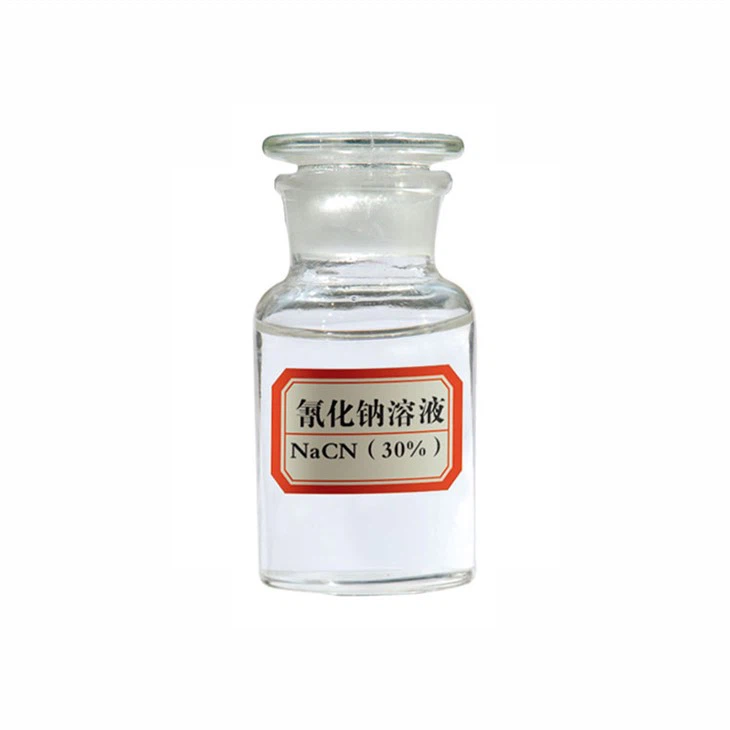
As a supplier of NaCN, we offer high - quality Sodium Cyanide products. Our Sodium Cyanide is produced under strict quality control measures to ensure its purity and effectiveness. We also offer Sodium Cyanide Solution, which is convenient for various industrial applications.
If you're in the business of gold mining or other industries that require sodium cyanide, you can also consider Potassium Cyanide. Potassium cyanide has similar chemical properties to sodium cyanide and can be used in similar applications.

Contact Us for Procurement
If you're interested in purchasing NaCN or have any questions about how it reacts with zinc or its applications in your industry, don't hesitate to reach out. We're here to help you understand the best way to use our products and ensure that you get the most out of them. Whether you're a small - scale mining operation or a large industrial company, we can provide you with the right amount of NaCN to meet your needs.
References
- Atkins, P., & de Paula, J. (2006). Physical Chemistry. Oxford University Press.
- Housecroft, C. E., & Sharpe, A. G. (2008). Inorganic Chemistry. Pearson Education.
- Kirk - Othmer Encyclopedia of Chemical Technology. Wiley.