

Is Cyanogran a strong or weak chemical?
Cyanogran, also known as calcium cyanide, is a chemical compound that has long been a subject of interest in various industries, especially in the field of gold extraction and mining. As a leading supplier of Cyanogran, I am often asked whether it is a strong or weak chemical. In this blog post, I will delve into the properties of Cyanogran and provide a comprehensive analysis to answer this question.
Chemical Properties of Cyanogran
Cyanogran has the chemical formula Ca(CN)₂. It is a white to grayish - white powder or crystalline solid. One of the key characteristics of Cyanogran is its reaction with water. When Cyanogran comes into contact with water, it hydrolyzes to release hydrogen cyanide (HCN), a highly toxic and volatile gas. The chemical equation for this reaction is:
Ca(CN)₂ + 2H₂O → Ca(OH)₂+ 2HCN
This hydrolysis reaction is an important aspect when considering the strength of Cyanogran. The release of hydrogen cyanide is a significant factor in its reactivity and toxicity.
Reactivity and Toxicity: Strength Indicators
In terms of reactivity, Cyanogran is considered a relatively strong chemical. The ability to generate hydrogen cyanide upon contact with water makes it highly reactive. Hydrogen cyanide is a powerful reducing agent and can react with a wide range of substances. For example, in gold extraction, cyanide ions (CN⁻) from Cyanogran can form complexes with gold ions (Au⁺ or Au³⁺), allowing the separation of gold from its ores. The reaction is as follows:

4Au + 8CN⁻+ O₂ + 2H₂O → 4[Au(CN)₂]⁻+ 4OH⁻
This reaction is the basis of the cyanide leaching process, which is widely used in the gold mining industry. The efficiency of this process demonstrates the strong reactivity of Cyanogran in specific chemical reactions.
From a toxicity perspective, Cyanogran is extremely dangerous. Hydrogen cyanide, the by - product of its hydrolysis, is a potent poison. It acts by inhibiting the enzyme cytochrome c oxidase in the mitochondria, which is essential for cellular respiration. This leads to the disruption of the body's ability to use oxygen, resulting in rapid cell death. Exposure to even small amounts of hydrogen cyanide can be fatal within minutes. Therefore, in terms of toxicity, Cyanogran is clearly a strong chemical.
Comparison with Other Cyanide Compounds
To further understand the strength of Cyanogran, it is useful to compare it with other common cyanide compounds such as Potassium Cyanide (KCN) and Sodium Cyanide (NaCN).
Potassium cyanide and sodium cyanide are also widely used in gold extraction. They are highly soluble in water and dissociate readily to release cyanide ions. In terms of reactivity, they are similar to Cyanogran in the cyanide leaching process. However, their solubility and the rate of cyanide ion release may differ. Potassium cyanide and sodium cyanide dissolve more quickly in water compared to Cyanogran, which may result in a faster start of the leaching process.
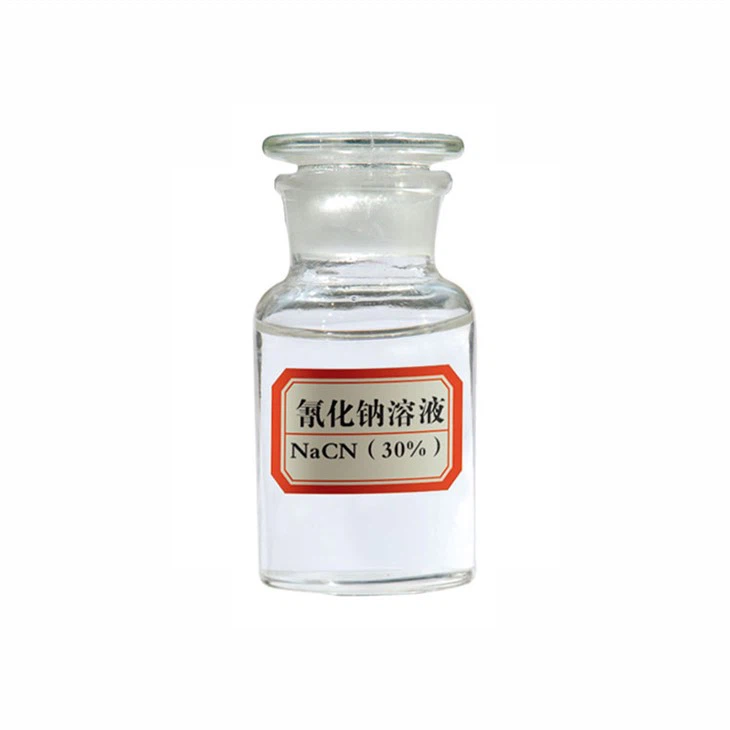
On the other hand, Sodium Cyanide Solution is already in a dissolved state, providing an immediate source of cyanide ions. This can be advantageous in some industrial applications where a rapid reaction is required.
Factors Affecting the "Strength" of Cyanogran
The strength of Cyanogran can be affected by several factors. Temperature is one of the most important factors. Higher temperatures can accelerate the hydrolysis reaction of Cyanogran, leading to a faster release of hydrogen cyanide. This means that in a warm environment, Cyanogran may exhibit stronger reactivity and toxicity.
The pH of the surrounding environment also plays a crucial role. In an acidic environment, the hydrolysis of Cyanogran is promoted, as the hydrogen ions from the acid can react with the cyanide ions to form more hydrogen cyanide. Conversely, in a basic environment, the formation of hydrogen cyanide is suppressed, reducing the reactivity and toxicity of Cyanogran.
Safety Precautions
Given the strong reactivity and high toxicity of Cyanogran, strict safety precautions must be taken when handling it. Workers should wear appropriate personal protective equipment, including respirators, gloves, and goggles. Storage facilities should be well - ventilated and kept away from sources of heat and moisture. In case of a spill, immediate action should be taken to contain and neutralize the chemical.
Applications of Cyanogran
Despite its potential hazards, Cyanogran has several important applications. As mentioned earlier, its main use is in the gold mining industry for gold extraction. It is also used in the electroplating industry, where cyanide ions can help in the deposition of metals such as gold, silver, and copper on various substrates.
Conclusion
In conclusion, Cyanogran is a strong chemical in terms of both reactivity and toxicity. Its ability to generate hydrogen cyanide upon contact with water makes it highly reactive, and the toxicity of hydrogen cyanide poses a significant threat to human health and the environment. However, when handled properly, it can be a valuable tool in various industrial processes.
If you are interested in purchasing Cyanogran for your industrial needs, we are here to provide you with high - quality products and professional services. Our team of experts can offer you detailed technical support and guidance on the safe use of Cyanogran. Please feel free to contact us for more information and to start a procurement negotiation.
References
- Kirk - Othmer Encyclopedia of Chemical Technology.
- Handbook of Inorganic Chemistry.
- Journal of Chemical Education, articles related to cyanide compounds and their applications.