

What are the common methods for modifying adsorbents?
Hey there! As an adsorbent supplier, I've seen firsthand how crucial it is to have effective methods for modifying adsorbents. Adsorbents play a vital role in various industries, from environmental protection to chemical processing. They're used to remove impurities, separate substances, and even recover valuable materials. So, in this blog post, I'm gonna share some of the common methods for modifying adsorbents that we often use and recommend.
Physical Modification
One of the simplest ways to modify adsorbents is through physical means. This involves changing the adsorbent's physical structure without altering its chemical composition. One common physical modification method is heat treatment. By heating the adsorbent at a specific temperature, we can change its pore structure and surface area. For example, activated carbon, a widely used adsorbent, can be heat - treated to increase its pore size and improve its adsorption capacity for larger molecules.
Another physical modification technique is mechanical grinding. Grinding the adsorbent into smaller particles increases its surface area, which in turn enhances its adsorption performance. This is especially useful for adsorbents like zeolites, where a larger surface area means more active sites for adsorption.
Chemical Modification
Chemical modification is a more complex but often more effective way to enhance the adsorption properties of adsorbents. One of the most common chemical modification methods is surface functionalization. This involves attaching specific functional groups to the surface of the adsorbent. For instance, we can introduce amino groups to the surface of an adsorbent to increase its affinity for metal ions. These functional groups can form strong chemical bonds with the target substances, improving the adsorbent's selectivity and adsorption capacity.
Another chemical modification approach is impregnation. In this method, the adsorbent is soaked in a solution containing a specific chemical. The chemical is then deposited on the surface or within the pores of the adsorbent. For example, we can impregnate activated carbon with metal salts to enhance its adsorption of certain gases.
Ion - Exchange Modification
Ion - exchange is a well - known method for modifying adsorbents, especially those used for water treatment. In ion - exchange modification, the original ions in the adsorbent are replaced with other ions. For example, in zeolites, the sodium ions can be exchanged with calcium or magnesium ions. This can change the adsorbent's surface charge and its affinity for different ions in the solution.
Ion - exchange modification is highly effective for removing heavy metal ions from water. By selecting the appropriate exchange ions, we can target specific metal ions and achieve high - efficiency removal.
Composite Modification
Composite modification involves combining two or more different adsorbents or materials to create a new composite adsorbent. This can take advantage of the unique properties of each component. For example, we can combine activated carbon with a metal oxide to create a composite adsorbent that has both the high surface area of activated carbon and the specific adsorption properties of the metal oxide.
Composite adsorbents can have enhanced adsorption performance, selectivity, and stability compared to single - component adsorbents. They're particularly useful in complex adsorption systems where multiple types of substances need to be removed.
Our Products
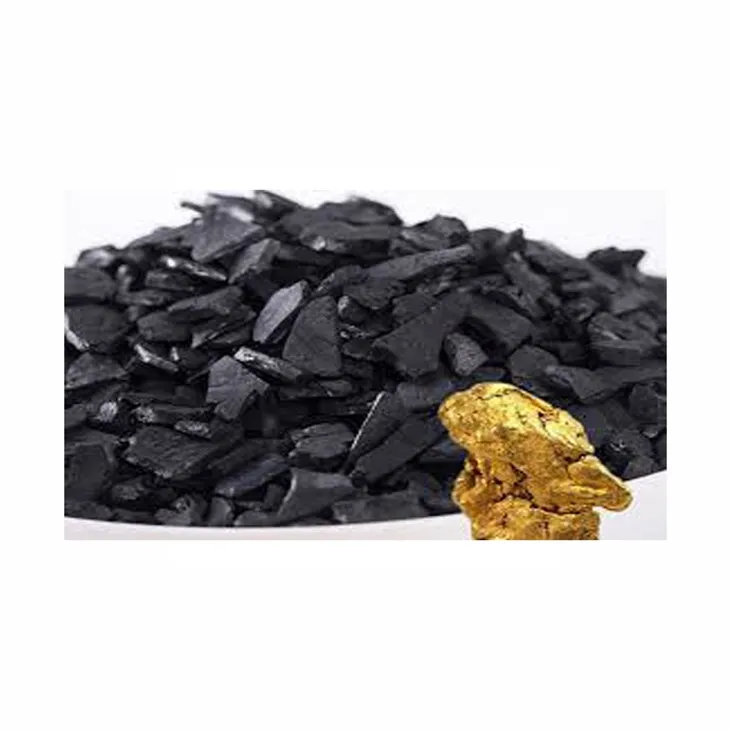
At our company, we've applied these modification methods to develop a range of high - performance adsorbents. Our GoldSorb 6000 is a prime example. It's been carefully modified through a combination of physical and chemical methods to have excellent adsorption properties for gold extraction. Its large surface area and specific functional groups make it highly efficient in capturing gold ions from solutions.
Another great product is our RPMH 1001. This adsorbent has undergone ion - exchange modification to target specific metal ions in water treatment. It can effectively remove heavy metals such as lead, mercury, and cadmium, making it an ideal choice for environmental protection applications.
We also have GC E612, a composite adsorbent that combines the best features of different materials. It's designed for complex separation processes and has shown outstanding performance in removing multiple types of contaminants.
Why Choose Our Modified Adsorbents?
The modification methods we use ensure that our adsorbents have high adsorption capacity, excellent selectivity, and good stability. Whether you're in the gold mining industry, water treatment, or any other field that requires adsorption technology, our products can meet your needs.
Our team of experts is constantly researching and developing new modification techniques to improve the performance of our adsorbents. We also offer customized solutions based on your specific requirements.

Let's Connect
If you're interested in our adsorbents or want to discuss your adsorption needs, don't hesitate to reach out. We're here to provide you with the best products and solutions. Whether you need a small - scale sample for testing or a large - scale supply for your industrial process, we can assist you.
In conclusion, modifying adsorbents is a key step in improving their performance and meeting the diverse needs of different industries. With our advanced modification methods and high - quality products, we're confident that we can be your reliable partner in adsorption technology.

References
- Foo, K. Y., & Hameed, B. H. (2010). Insights into the modeling of adsorption isotherm systems. Chemical Engineering Journal, 156(1), 2 - 10.
- Huang, X., & Pan, B. (2015). Nanoscale zero - valent iron: Future prospects for an emerging water treatment technology. Chemical Society Reviews, 44(10), 3087 - 3105.
- Yang, R. T. (2003). Gas separation by adsorption processes. World Scientific.