

What are the effects of Irgafos 168 on the impact strength of polymers?
As a supplier of Irgafos 168, I've witnessed firsthand the widespread interest in understanding its impact on polymers, particularly regarding their impact strength. Irgafos 168 is a well - known processing stabilizer in the polymer industry. In this blog, we'll explore how Irgafos 168 influences the impact strength of polymers, delving into the underlying mechanisms and practical implications.

The Basics of Irgafos 168
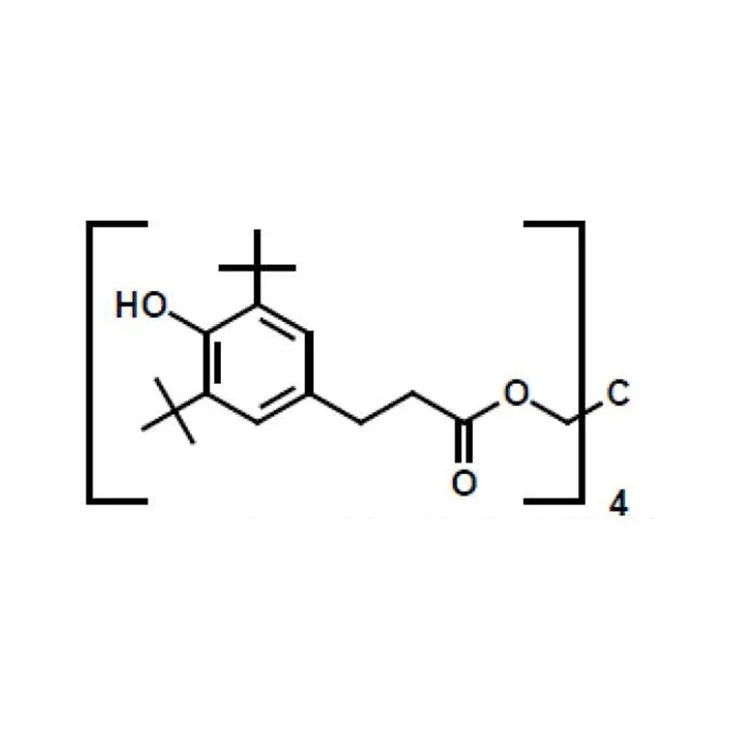
Irgafos 168, chemically known as tris(2,4 - di - tert - butylphenyl) phosphite, is a high - performance organophosphite antioxidant. It is widely used in combination with primary antioxidants such as AT - 10 and Irganox 3114 to provide excellent protection for polymers during processing and long - term aging.
When polymers are processed at high temperatures, they are prone to thermal oxidation, which can lead to chain scission, cross - linking, and the formation of free radicals. These processes can significantly degrade the physical and mechanical properties of polymers, including impact strength. Irgafos 168 acts as a secondary antioxidant by decomposing hydroperoxides formed during oxidation, thereby preventing the propagation of free - radical reactions and protecting the polymer chains from damage.
Influence on Impact Strength
Protection During Processing
During the processing of polymers, such as extrusion, injection molding, or blow molding, high temperatures are involved. These high - temperature conditions can cause thermal degradation of polymers, resulting in a decrease in molecular weight and a subsequent reduction in impact strength. Irgafos 168 can effectively scavenge free radicals and decompose hydroperoxides generated during processing. By doing so, it helps to maintain the integrity of the polymer chains, preventing chain scission and cross - linking. As a result, the polymer retains its original molecular weight and structural properties, which are crucial for maintaining good impact strength.
For example, in polyolefins like polyethylene and polypropylene, the addition of Irgafos 168 can significantly improve the melt stability during extrusion. This allows for a more consistent processing, reducing the formation of defects and improving the overall quality of the final product. The polymer products with Irgafos 168 added are less likely to experience embrittlement due to thermal degradation, thus maintaining a higher impact strength compared to those without proper stabilization.
Long - Term Aging Resistance
Polymers are often exposed to various environmental factors during their service life, such as heat, oxygen, light, and mechanical stress. Over time, these factors can cause oxidative aging of polymers, leading to a gradual decline in impact strength. Irgafos 168, when used in combination with primary antioxidants, provides long - term protection against oxidative aging.
It works synergistically with primary antioxidants to break the oxidation chain reaction. Primary antioxidants mainly react with free radicals, while Irgafos 168 decomposes hydroperoxides, which are intermediate products of oxidation. This combined action effectively slows down the oxidation process, extending the service life of polymers and maintaining their impact strength over time.
In automotive applications, where polymer components are exposed to high temperatures under the hood and harsh environmental conditions, the use of Irgafos 168 in combination with other antioxidants can ensure that the parts maintain their impact strength throughout the vehicle's service life. This is crucial for ensuring the safety and reliability of automotive components.
Influence on Polymer Morphology
Irgafos 168 can also have an impact on the morphology of polymers, which in turn affects their impact strength. Some studies have shown that Irgafos 168 can influence the crystallization behavior of semi - crystalline polymers. By reducing the thermal degradation during processing, it can promote more uniform crystallization, resulting in a finer and more homogeneous crystal structure.
A finer crystal structure can improve the impact strength of semi - crystalline polymers because it provides more interfaces for energy dissipation during impact. When an impact occurs, the energy can be absorbed and dissipated more effectively at these interfaces, preventing the propagation of cracks and improving the overall toughness of the polymer.
Factors Affecting the Impact of Irgafos 168 on Impact Strength
Concentration
The concentration of Irgafos 168 in the polymer formulation is a critical factor. Generally, within a certain range, increasing the concentration of Irgafos 168 can enhance its protective effect on the polymer, leading to an improvement in impact strength. However, if the concentration is too high, it may cause some negative effects. For example, excessive Irgafos 168 may migrate to the surface of the polymer, leading to blooming and affecting the appearance and surface properties of the product. In addition, very high concentrations may also affect the processing properties of polymers, such as increasing the melt viscosity.
Polymer Type
Different polymers have different chemical structures and properties, and their responses to Irgafos 168 can vary. For example, polyolefins are highly susceptible to thermal oxidation and can benefit greatly from the addition of Irgafos 168. On the other hand, some engineering plastics, such as polycarbonate and polyamide, have different oxidation mechanisms and may require a different antioxidant system or a different combination of antioxidants. The effectiveness of Irgafos 168 in improving the impact strength of these polymers depends on their specific chemical structures and processing conditions.
Processing Conditions
The processing conditions, such as temperature, shear rate, and residence time, also play an important role. Higher processing temperatures and longer residence times increase the likelihood of thermal degradation, making the protection provided by Irgafos 168 more crucial. However, if the processing conditions are too severe, even with the addition of Irgafos 168, the polymer may still experience some degree of degradation. Therefore, it is necessary to optimize the processing conditions in combination with the use of Irgafos 168 to achieve the best results in terms of impact strength.
Practical Applications
The ability of Irgafos 168 to improve the impact strength of polymers has led to its wide application in various industries.
In the packaging industry, polymers with enhanced impact strength are essential for ensuring the integrity of the packaged products during transportation and storage. Irgafos 168 - stabilized polymers can be used to manufacture packaging materials such as bottles, films, and containers, which can withstand the mechanical stress during handling without breaking or cracking.
In the construction industry, polymer - based materials are used in a variety of applications, such as pipes, window profiles, and insulation materials. The addition of Irgafos 168 can improve the impact resistance of these materials, making them more durable and reliable in harsh outdoor environments.
Conclusion
In conclusion, Irgafos 168 plays a vital role in improving the impact strength of polymers. Through its antioxidant properties, it protects polymers from thermal degradation during processing and long - term oxidative aging. It also has an influence on polymer morphology, which can further enhance the impact strength of semi - crystalline polymers. However, the effectiveness of Irgafos 168 is affected by factors such as concentration, polymer type, and processing conditions.
As a reliable supplier of Irgafos 168, we are committed to providing high - quality products and technical support to our customers. If you are interested in improving the impact strength of your polymer products or have any questions about the application of Irgafos 168, please feel free to contact us for further discussion and procurement negotiation. We look forward to working with you to achieve the best performance for your polymer applications.
References
- Allen, N. S., & Edge, M. (1992). Autoxidation of polymers and the role of antioxidants. CRC Press.
- Scott, G. (1993). Atmospheric oxidation and antioxidants. Elsevier.
- Zweifel, H., Schiller, M., & Maier, C. (2001). Plastics additives handbook. Hanser Publishers.