

What are the products when KCN reacts with halogens?
Hey there! As a supplier of Potassium Cyanide (KCN), I often get asked about the reactions of KCN, especially with halogens. So, let's dive right into it and explore what products are formed when KCN reacts with halogens.
First off, let's quickly go over what KCN is. Potassium Cyanide is a highly toxic but very useful chemical compound. You can learn more about it Potassium Cyanide. It's got a wide range of applications, from gold extraction in the mining industry to use in organic synthesis in the chemical industry.
Now, onto the halogens. The halogens are a group of elements in the periodic table, including fluorine (F), chlorine (Cl), bromine (Br), iodine (I), and astatine (At). For the sake of this discussion, we'll focus on the more common ones: chlorine, bromine, and iodine.
Reaction with Chlorine (Cl₂)
When KCN reacts with chlorine gas (Cl₂), the reaction is quite interesting. The main product formed is cyanogen chloride (CNCl). The chemical equation for this reaction is:

2KCN + Cl₂ → 2KCl + (CN)₂
(CN)₂ + Cl₂ → 2CNCl
In the first step, potassium cyanide reacts with chlorine to form potassium chloride (KCl) and cyanogen ((CN)₂). Cyanogen is a colorless, highly toxic gas with a pungent odor. Then, cyanogen further reacts with more chlorine to produce cyanogen chloride.
Cyanogen chloride is a volatile, colorless liquid or gas with a strong, irritating odor. It's used in the production of some pesticides and as a chemical intermediate in organic synthesis. But it's also extremely toxic and can cause severe respiratory problems and even death if inhaled in high concentrations.
Reaction with Bromine (Br₂)
The reaction of KCN with bromine is similar to that with chlorine. When KCN reacts with bromine, cyanogen bromide (CNBr) is formed. The reaction can be represented by the following equation:
2KCN + Br₂ → 2KBr + (CN)₂
(CN)₂ + Br₂ → 2CNBr
Just like cyanogen chloride, cyanogen bromide is a toxic compound. It's a white crystalline solid that's used in peptide synthesis and in the production of some pharmaceuticals. It's also a powerful lachrymator, which means it can cause severe eye irritation and tearing.
Reaction with Iodine (I₂)
When KCN reacts with iodine, cyanogen iodide (CNI) is the main product. The reaction equation is:
2KCN + I₂ → 2KI + (CN)₂
(CN)₂ + I₂ → 2CNI
Cyanogen iodide is a yellow, crystalline solid. It's less commonly used compared to cyanogen chloride and bromide, but it still has some applications in organic synthesis.
Applications of the Products
The products formed from the reaction of KCN with halogens have various applications. Cyanogen chloride and bromide are used in the production of pesticides, pharmaceuticals, and other organic compounds. They're also used in some chemical warfare agents, although their use in this context is highly regulated.
In the pharmaceutical industry, these compounds are used as building blocks for the synthesis of more complex molecules. For example, cyanogen bromide is used in peptide synthesis to cleave peptide bonds at specific sites.
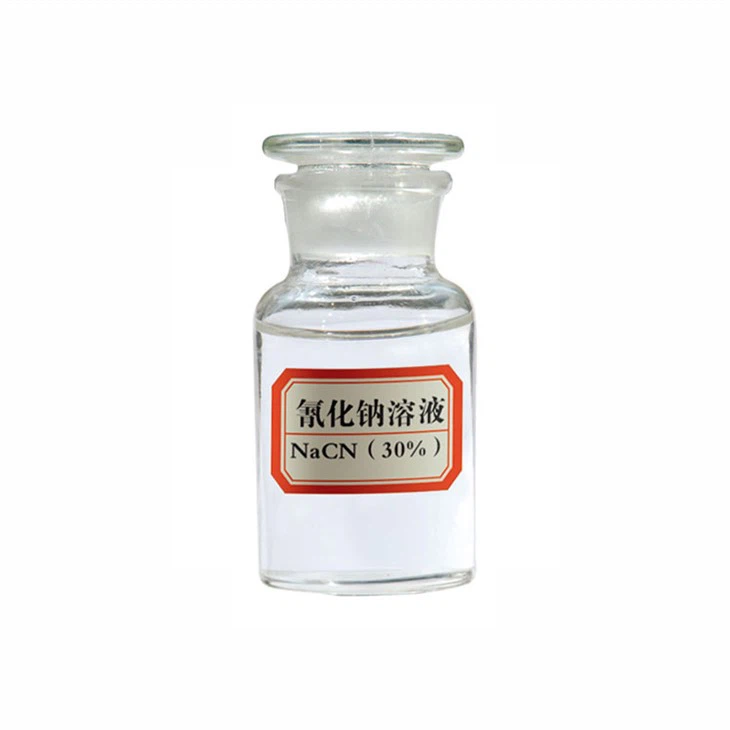
In the mining industry, KCN itself is widely used for gold extraction. You can also check out Sodium Cyanide and Sodium Cyanide Solution which are also commonly used in this process.
Safety Considerations
It's important to note that all the reactants and products involved in these reactions are highly toxic. Potassium cyanide, chlorine, bromine, iodine, and the cyanogen halides are all extremely dangerous substances. They should be handled with extreme care in a well-ventilated area, and appropriate safety equipment such as gloves, goggles, and respirators should be worn.
If you're interested in using KCN or any of its reaction products in your industry, make sure you have the necessary safety protocols in place and are familiar with the regulations regarding their use and handling.
Why Choose Us as Your KCN Supplier
As a reliable supplier of Potassium Cyanide, we understand the importance of quality and safety. We ensure that our KCN products meet the highest standards and are delivered safely and efficiently to our customers.
We have a team of experts who can provide you with technical support and guidance on the use of KCN. Whether you're in the mining industry, the chemical industry, or any other industry that requires KCN, we can help you find the right solution for your needs.
If you're interested in purchasing KCN or have any questions about its reactions or applications, don't hesitate to contact us. We're here to assist you with all your KCN-related needs.
Conclusion
In conclusion, the reaction of KCN with halogens results in the formation of cyanogen halides such as cyanogen chloride, bromide, and iodide. These products have various applications in different industries, but they're also highly toxic and require careful handling.
As a KCN supplier, we're committed to providing high-quality products and excellent customer service. If you're looking for a reliable source of KCN, we'd love to hear from you. Contact us today to discuss your requirements and start a partnership that will benefit your business.
References
- Atkins, P., & de Paula, J. (2014). Physical Chemistry for the Life Sciences. Oxford University Press.
- Housecroft, C. E., & Sharpe, A. G. (2012). Inorganic Chemistry. Pearson.
- Morrison, R. T., & Boyd, R. N. (1992). Organic Chemistry. Prentice Hall.