

What is the role of adsorbents in chromatography?
Hey there! As a supplier of adsorbents, I often get asked about the role of adsorbents in chromatography. So, I thought I'd take a moment to break it down for you in a way that's easy to understand.
First off, let's talk about what chromatography is. In simple terms, chromatography is a technique used to separate the components of a mixture. It's like sorting out a big pile of different colored beads into their own groups. There are different types of chromatography, such as gas chromatography, liquid chromatography, and ion - exchange chromatography, but they all have one thing in common: they rely on the interaction between the sample mixture and a stationary phase.
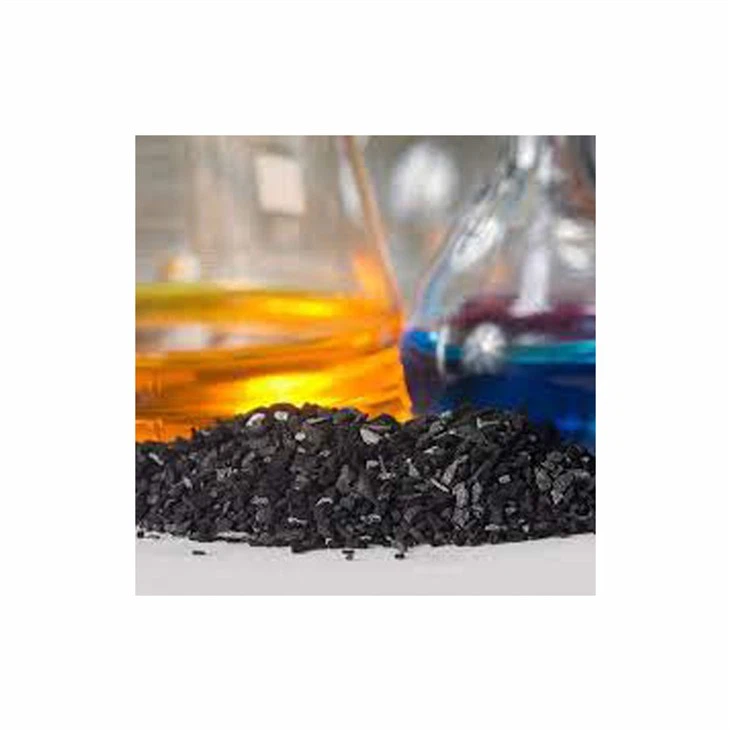
And that's where adsorbents come in. Adsorbents are the materials that make up the stationary phase in many chromatography systems. They're like the catchers in a game of baseball, grabbing onto certain components of the sample mixture and holding them back while others pass through more quickly.
The basic principle behind the use of adsorbents in chromatography is adsorption. Adsorption is the process by which molecules from the sample mixture stick to the surface of the adsorbent. This happens because of the attractive forces between the molecules in the sample and the atoms or molecules on the surface of the adsorbent. Different adsorbents have different surface properties, which means they can attract different types of molecules.
For example, some adsorbents are good at attracting polar molecules, while others are better at attracting non - polar molecules. This selectivity is what makes chromatography such a powerful tool for separating complex mixtures. If you know what kind of molecules you're trying to separate, you can choose an adsorbent that will have a strong affinity for those molecules.
One of the key advantages of using adsorbents in chromatography is their ability to provide high resolution. Resolution refers to the ability to separate closely related components of a mixture. By carefully selecting the right adsorbent and the right chromatography conditions, you can achieve very high resolution, which means you can distinguish between components that are very similar to each other.
Let's take a look at some of the different types of adsorbents that we offer as a supplier. We have products like RMPC1034. This adsorbent is designed for specific applications where high selectivity and high capacity are required. It has a unique surface structure that allows it to adsorb certain types of molecules very effectively.
Another great product in our lineup is RPMH 1003. This adsorbent is known for its excellent mechanical stability and its ability to work well in a wide range of chromatography conditions. It's a popular choice among researchers and analysts who need a reliable adsorbent for their chromatography experiments.
We also have GC E612(S). This adsorbent is optimized for gas chromatography applications. It has a high surface area, which means it can adsorb a large amount of sample molecules, and it also has a low volatility, which is important for maintaining the integrity of the chromatography system.
In addition to their role in separation, adsorbents can also be used for purification purposes. After the separation process, the components that are adsorbed onto the adsorbent can be eluted (removed) using a suitable solvent. This allows you to collect the purified components of the sample mixture.
The performance of an adsorbent in chromatography depends on several factors. One of the most important factors is the particle size of the adsorbent. Smaller particle sizes generally lead to better resolution because they provide a larger surface area for adsorption. However, smaller particles can also cause higher pressure drops in the chromatography column, which can be a problem in some systems.
Another factor is the pore size of the adsorbent. The pore size determines which molecules can enter the pores of the adsorbent and be adsorbed. If the pore size is too small, large molecules won't be able to enter the pores, and if it's too large, the selectivity of the adsorbent may be reduced.
The choice of adsorbent also depends on the nature of the sample mixture. If you're working with a mixture of large molecules, you might need an adsorbent with large pores. On the other hand, if you're dealing with small molecules, a adsorbent with small pores and high surface area might be more suitable.
As a supplier, we understand the importance of providing high - quality adsorbents. We conduct rigorous quality control tests on all our products to ensure that they meet the highest standards. We also offer technical support to our customers to help them choose the right adsorbent for their specific applications.
If you're in the market for adsorbents for your chromatography needs, we'd love to hear from you. Whether you're a researcher in a laboratory, an analyst in a quality control department, or someone involved in large - scale industrial chromatography processes, we have the products and the expertise to meet your requirements.
Contact us to start a conversation about your chromatography projects. We can provide you with samples of our adsorbents so you can test them in your own system. And if you have any questions about how to use our adsorbents or how they work in chromatography, our team of experts is here to help.

We're committed to providing the best possible products and services to our customers. So, don't hesitate to reach out and see how we can help you achieve better results in your chromatography work.
References
- Snyder, L. R., Kirkland, J. J., & Glajch, J. L. (2010). Practical HPLC Method Development. Wiley.
- Poole, C. F. (2003). Chromatography Today. Elsevier.
- Guiochon, G., Golshan - Shirazi, S., & Katti, A. M. (1994). Fundamentals of Preparative and Nonlinear Chromatography. Academic Press.