

What are the properties of materials prepared with 143 - 33 - 9?
Properties of Materials Prepared with 143 - 33 - 9
As a well - known supplier of 143 - 33 - 9, I am frequently asked about the properties of materials prepared with this compound. First and foremost, what exactly is 143 - 33 - 9? It is the CAS (Chemical Abstracts Service) registry number for Sodium Cyanide ((NaCN)). Sodium Cyanide has been a fundamental chemical for various industrial applications, and understanding the properties of materials made from it is crucial for anyone involved in industries such as mining, electroplating, and organic synthesis.
Physical Properties
Materials prepared with 143 - 33 - 9 often inherit some of its characteristic physical properties. Sodium Cyanide itself is a white, water - soluble solid with a cube - like crystal structure. When used in material preparation, it can greatly affect the solubility and density of the resultant materials. For example, in gold mining operations, Sodium Cyanide is used to form a soluble gold complex. The solution of the gold - cyanide complex has different physical properties compared to the raw gold ore. The gold - cyanide solution is a homogeneous liquid with a relatively lower density than the solid ore, which allows for easier separation and further processing.
The melting point of Sodium Cyanide is around 563.7 °C. This high melting point can also influence the thermal stability of materials prepared with it. In some high - temperature processes, materials containing Sodium Cyanide may retain their structural integrity up to relatively high temperatures, which is beneficial in applications where heat resistance is required.
Chemical Properties
One of the most significant chemical properties of materials prepared with 143 - 33 - 9 is their strong reactivity towards certain metals. Sodium Cyanide is well - known for its ability to form stable complexes with precious metals such as gold and silver. In the gold mining industry, Sodium Cyanide reacts with gold in the presence of oxygen and water to form a soluble gold cyanide complex, (Au(CN)_2^-), according to the following reaction:

(4Au + 8NaCN+ O_2+ 2H_2O\rightarrow4Na[Au(CN)_2]+ 4NaOH)
This reaction is the basis of the cyanide leaching process, which is a widely used method for extracting gold from low - grade ores. The formation of these metal - cyanide complexes is highly selective, allowing for the efficient extraction of precious metals from complex ore mixtures.
In organic synthesis, materials prepared with 143 - 33 - 9 can act as a source of the cyanide ion ((CN^-)). The cyanide ion is a strong nucleophile, which means it has a high affinity for positively charged atoms or ions. This property makes it useful in reactions such as nucleophilic substitution reactions. For instance, in the synthesis of nitriles, Sodium Cyanide can react with alkyl halides to form alkyl nitriles:
(R - X+ NaCN\rightarrow R - CN+ NaX)
where (R) represents an alkyl group and (X) is a halogen atom.
Environmental and Safety Considerations
It is important to note that Sodium Cyanide is highly toxic. Materials prepared with 143 - 33 - 9 must be handled with extreme care. In aqueous solutions, Sodium Cyanide can release hydrogen cyanide gas ((HCN)) under acidic conditions. Hydrogen cyanide is a colorless, highly toxic gas with a characteristic bitter - almond odor. Therefore, proper safety measures, such as wearing protective clothing, using proper ventilation systems, and having access to antidotes, are essential when working with materials containing Sodium Cyanide.
From an environmental perspective, the use of Sodium Cyanide in mining and other industries has been a subject of concern. However, strict regulations have been put in place to ensure that the disposal of materials containing Sodium Cyanide is carried out in an environmentally friendly manner. For example, in the gold mining industry, the cyanide solutions are often recycled and treated to remove any remaining cyanide before being discharged into the environment.
Comparison with Related Compounds
When discussing the properties of materials prepared with 143 - 33 - 9, it is also interesting to compare it with related compounds such as Potassium Cyanide (CAS 151 - 50 - 8). Both Sodium Cyanide and Potassium Cyanide have similar chemical properties and are used in similar applications. However, Potassium Cyanide is more soluble in water than Sodium Cyanide. This difference in solubility can affect the reaction kinetics and the efficiency of processes such as gold leaching.
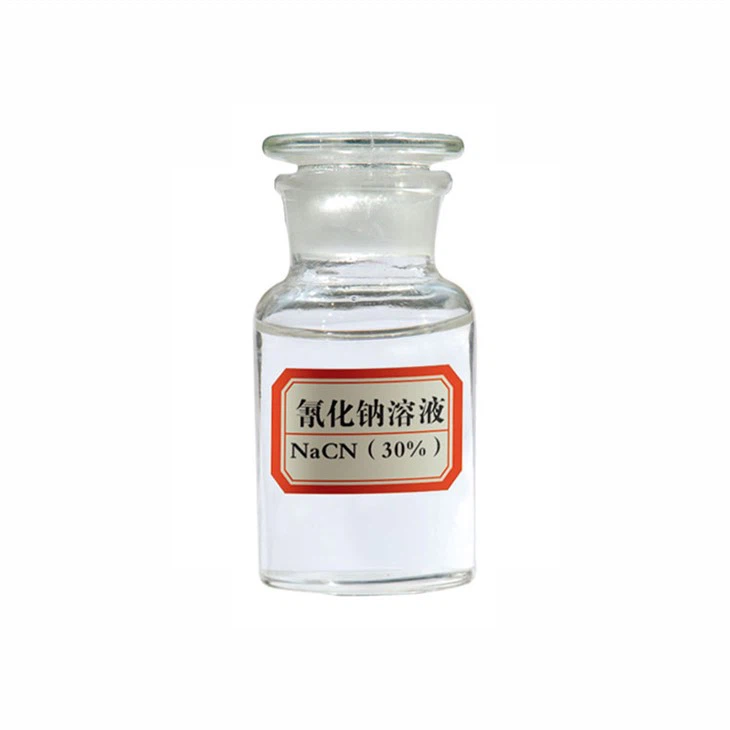
Another related compound is Sodium Cyanide Solution. Using a pre - made Sodium Cyanide solution can simplify the material preparation process. The solution is already in a liquid state, which can be more convenient for certain applications, such as electroplating. However, the concentration of the solution needs to be carefully controlled to ensure the desired properties of the final material.
Applications and Their Impact on Material Properties
In the electroplating industry, materials prepared with 143 - 33 - 9 are used to deposit a layer of metal on a substrate. The presence of Sodium Cyanide in the electroplating bath can improve the quality of the metal deposit. It helps to control the deposition rate and the uniformity of the metal layer. The cyanide ions in the solution can also act as complexing agents, preventing the formation of metal hydroxides and other impurities during the electroplating process. As a result, the electroplated materials have a smooth, shiny surface and better corrosion resistance.
In the pharmaceutical industry, Sodium Cyanide can be used as a starting material for the synthesis of various drugs. The properties of the final pharmaceutical products can be influenced by the purity and reactivity of the Sodium Cyanide used. High - purity Sodium Cyanide is often required to ensure the quality and safety of the drugs.
Conclusion
In conclusion, the properties of materials prepared with 143 - 33 - 9 are diverse and depend on various factors such as the application, the reaction conditions, and the presence of other compounds. The physical and chemical properties of Sodium Cyanide, such as its solubility, reactivity towards metals, and thermal stability, play a significant role in determining the properties of the final materials.
As a reliable supplier of 143 - 33 - 9, we are committed to providing high - quality Sodium Cyanide products. Our products are carefully manufactured and tested to meet the strictest quality standards. If you are interested in purchasing Sodium Cyanide for your industrial or research needs, we welcome you to contact us for further discussions. We can provide you with detailed information about our products and help you find the best solution for your specific requirements.
References
- Kirk - Othmer Encyclopedia of Chemical Technology.
- Handbook of Inorganic Chemicals.
- Environmental Science and Technology Journal articles on cyanide management in mining.