

What is the adsorption mechanism of an adsorbent?
Adsorption is a fundamental process in various industries, playing a crucial role in applications such as water purification, gas separation, and gold extraction. As a leading adsorbent supplier, we are deeply involved in the research, development, and supply of high - performance adsorbents. In this blog, we will explore the adsorption mechanism of adsorbents, which is essential for understanding their performance and applications.
Basic Concepts of Adsorption
Adsorption is a surface phenomenon where molecules or ions from a fluid phase (gas or liquid) accumulate on the surface of a solid adsorbent. There are two main types of adsorption: physical adsorption (physisorption) and chemical adsorption (chemisorption).
Physical Adsorption
Physical adsorption occurs due to weak van der Waals forces between the adsorbate (the substance being adsorbed) and the adsorbent. These forces include London dispersion forces, dipole - dipole interactions, and hydrogen bonding. The energy of physical adsorption is relatively low, typically in the range of 5 - 40 kJ/mol.
One of the key characteristics of physical adsorption is its reversibility. The adsorbate can be easily desorbed by changing the temperature, pressure, or concentration of the adsorbate in the fluid phase. Physical adsorption is often fast and can reach equilibrium quickly. It is also non - specific, meaning that the adsorbent can adsorb a wide range of substances.
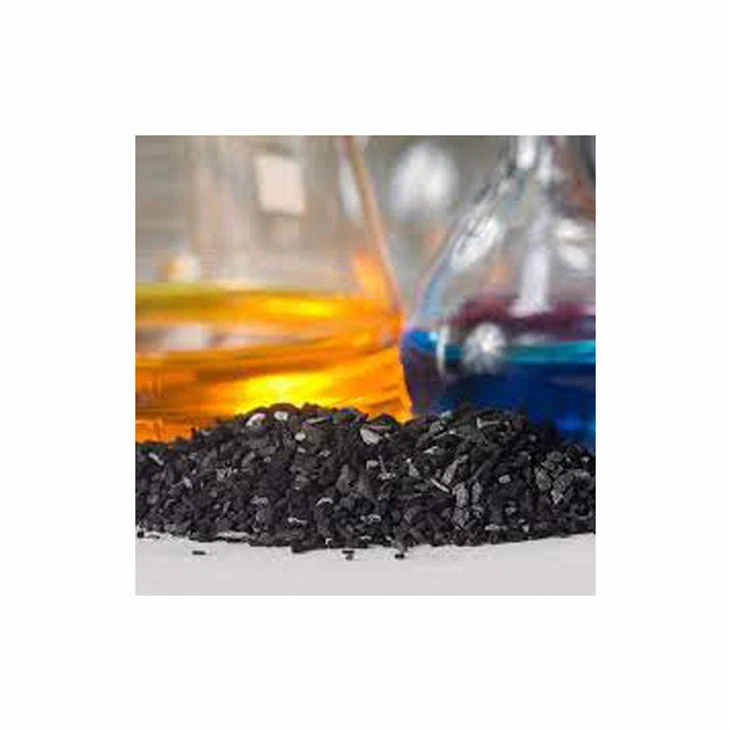
For example, activated carbon is a well - known adsorbent that works mainly through physical adsorption. It has a large surface area and a porous structure, which provides numerous sites for the adsorbate molecules to attach. Activated carbon can be used to adsorb organic compounds, gases such as methane and carbon dioxide, and even some heavy metal ions in water.
Chemical Adsorption
Chemical adsorption, on the other hand, involves the formation of chemical bonds between the adsorbate and the adsorbent. The energy of chemical adsorption is much higher than that of physical adsorption, usually in the range of 40 - 800 kJ/mol. This type of adsorption is often irreversible or difficult to reverse.
Chemical adsorption is highly specific, as it depends on the chemical nature of the adsorbate and the adsorbent. It usually requires a certain activation energy to occur, and the adsorption rate is often slower than physical adsorption. For instance, in the case of metal - organic frameworks (MOFs), some MOFs can selectively adsorb specific gas molecules through chemical bonding. For example, MOFs with open metal sites can form coordination bonds with certain gas molecules such as carbon monoxide or nitrogen oxides.
Factors Affecting Adsorption Mechanism
Surface Area and Pore Structure
The surface area and pore structure of an adsorbent are two of the most important factors affecting its adsorption performance. A larger surface area provides more adsorption sites for the adsorbate molecules. Adsorbents with a high surface area, such as activated carbon and zeolites, can adsorb a large amount of adsorbate.
Pore size and pore distribution also play a crucial role. Different adsorbates have different molecular sizes, and the pore size of the adsorbent should be appropriate for the adsorbate molecules to enter. For example, microporous adsorbents (pore size < 2 nm) are suitable for adsorbing small molecules, while mesoporous adsorbents (pore size between 2 - 50 nm) can adsorb larger molecules. Macroporous adsorbents (pore size > 50 nm) are mainly used for the initial diffusion of adsorbate molecules into the adsorbent.
Chemical Composition
The chemical composition of the adsorbent determines its chemical properties and the type of interactions it can have with the adsorbate. For example, adsorbents with acidic or basic functional groups on their surface can interact with acidic or basic adsorbates through acid - base reactions.
In the case of gold extraction, specific adsorbents are designed to have chemical groups that can form strong bonds with gold ions. Our RPMH 1003 adsorbent is specially formulated to have high selectivity and affinity for gold ions in the solution. The chemical composition of RPMH 1003 allows it to form stable complexes with gold ions through chemical adsorption, enabling efficient gold recovery.
Temperature
Temperature has a significant impact on both physical and chemical adsorption. In physical adsorption, an increase in temperature usually leads to a decrease in adsorption capacity because the kinetic energy of the adsorbate molecules increases, making it easier for them to escape from the adsorbent surface.
For chemical adsorption, the effect of temperature is more complex. At low temperatures, the adsorption rate may be slow due to the lack of activation energy. As the temperature increases, the adsorption rate may increase until it reaches a maximum. Further increasing the temperature may cause the desorption of the adsorbate due to the breaking of the chemical bonds.
Concentration of Adsorbate
The concentration of the adsorbate in the fluid phase also affects the adsorption process. According to the adsorption isotherm, at low concentrations, the adsorption capacity usually increases linearly with the increase in adsorbate concentration. As the concentration continues to increase, the adsorption capacity may reach a saturation point, where all the available adsorption sites on the adsorbent are occupied.
Adsorption Isotherms
Adsorption isotherms are mathematical models that describe the relationship between the amount of adsorbate adsorbed on the adsorbent and the equilibrium concentration of the adsorbate in the fluid phase at a constant temperature. There are several common adsorption isotherm models, such as the Langmuir isotherm, Freundlich isotherm, and BET isotherm.
Langmuir Isotherm
The Langmuir isotherm assumes that the adsorption occurs on a homogeneous surface with a fixed number of adsorption sites, and each site can adsorb only one adsorbate molecule. The adsorption is a reversible process, and there is no interaction between the adsorbed molecules. The Langmuir isotherm equation is given by:
[q = \frac{q_{max}K_{L}C}{1 + K_{L}C}]
where (q) is the amount of adsorbate adsorbed per unit mass of the adsorbent, (q_{max}) is the maximum adsorption capacity, (K_{L}) is the Langmuir constant related to the affinity between the adsorbate and the adsorbent, and (C) is the equilibrium concentration of the adsorbate in the fluid phase.
Freundlich Isotherm
The Freundlich isotherm is an empirical model that assumes that the adsorption occurs on a heterogeneous surface. The Freundlich isotherm equation is:

[q = K_{F}C^{\frac{1}{n}}]
where (K_{F}) and (n) are Freundlich constants. The value of (n) indicates the favorability of the adsorption process. If (n> 1), the adsorption is favorable; if (n = 1), the adsorption is linear; and if (n<1), the adsorption is less favorable.
BET Isotherm
The BET isotherm is used to describe multilayer adsorption on a solid surface. It is based on the assumption that the adsorbate molecules can form multiple layers on the adsorbent surface. The BET isotherm equation is more complex and is mainly used to calculate the specific surface area of the adsorbent.
Adsorbents for Gold Extraction
In the gold extraction industry, adsorbents play a vital role in recovering gold from ore leach solutions. Our company offers a range of high - performance adsorbents for gold extraction, such as GC E612(S) and RMPC1032.
These adsorbents are designed to have high selectivity and affinity for gold ions. They work through a combination of physical and chemical adsorption mechanisms. The physical adsorption provides a fast initial uptake of gold ions, while the chemical adsorption ensures a strong and stable binding of gold ions to the adsorbent.
The unique pore structure and chemical composition of these adsorbents allow them to efficiently adsorb gold ions from the solution. For example, GC E612(S) has a well - defined pore size distribution that allows gold ions to easily diffuse into the adsorbent, and its surface functional groups can form strong chemical bonds with gold ions.
Conclusion
Understanding the adsorption mechanism of adsorbents is essential for optimizing their performance in various applications. The type of adsorption (physical or chemical), the factors affecting adsorption, and the adsorption isotherms all play important roles in determining the adsorption capacity, selectivity, and efficiency of an adsorbent.
As a leading adsorbent supplier, we are committed to developing and supplying high - quality adsorbents that are tailored to the specific needs of our customers. Whether it is for water purification, gas separation, or gold extraction, our adsorbents are designed to provide excellent performance based on a deep understanding of the adsorption mechanism.
If you are interested in our adsorbents or have any questions about adsorption processes, we invite you to contact us for further discussion and potential procurement. We look forward to working with you to meet your specific requirements.
References
- Rouquerol, F., Rouquerol, J., & Singh, K. (1999). Adsorption by Powders and Porous Solids: Principles, Methodology and Applications. Academic Press.
- Yang, R. T. (2003). Gas Separation by Adsorption Processes. World Scientific.
- Foo, K. Y., & Hameed, B. H. (2010). Insights into the modeling of adsorption isotherm systems. Chemical Engineering Journal, 156(1), 2 - 10.