

What magnetic materials can be prepared with 143 - 33 - 9?
In the realm of materials science, the search for novel magnetic materials is a continuous and exciting journey. As a supplier of the chemical compound with the code 143 - 33 - 9, which is sodium cyanide (you can learn more about it at Sodium Cyanide), I am often intrigued by the potential applications of this compound, especially in the preparation of magnetic materials. In this blog post, we will explore what magnetic materials can be prepared using 143 - 33 - 9 and the scientific principles behind these preparations.
Understanding Sodium Cyanide (143 - 33 - 9)
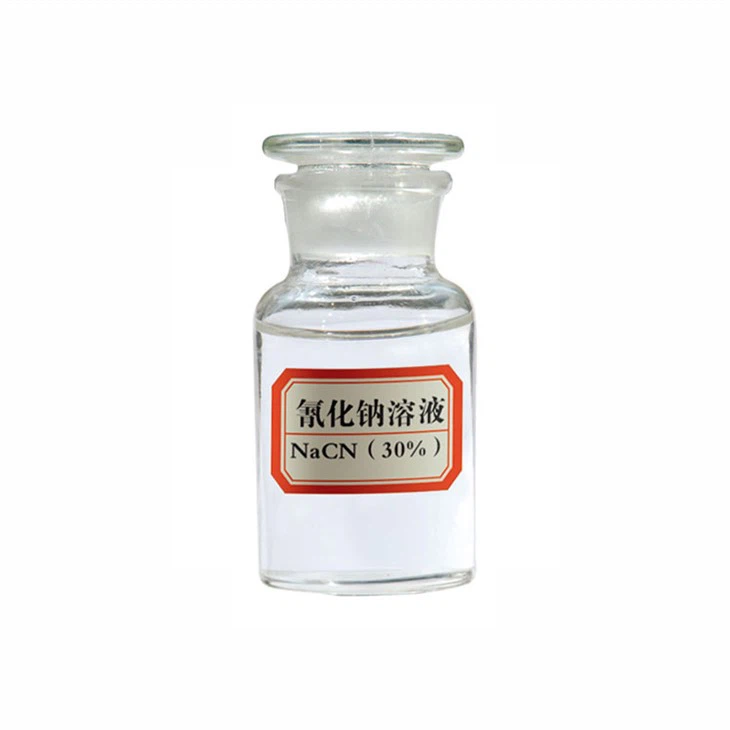
Sodium cyanide, with the chemical formula NaCN, is a highly toxic yet widely used industrial chemical. It is commonly employed in gold extraction as a leaching agent (for more details, visit Sodium Cyanide Solution). However, its chemical properties also make it a candidate for use in the synthesis of various materials, including magnetic ones. Sodium cyanide contains a cyanide ion (CN⁻), which can form coordination complexes with metal ions. These complexes can have unique electronic and magnetic properties depending on the metal ions involved.
Magnetic Materials and Their Significance
Magnetic materials play a crucial role in modern technology. They are used in a wide range of applications, from data storage devices such as hard drives to electric motors, transformers, and magnetic resonance imaging (MRI) machines. The magnetic properties of materials are determined by the arrangement of their electrons and the interactions between them. Ferromagnetic materials, for example, have strong magnetic moments and can be magnetized to form permanent magnets. Paramagnetic materials are weakly attracted to magnetic fields, while diamagnetic materials are repelled by them.
Preparing Magnetic Materials with Sodium Cyanide
One of the ways to prepare magnetic materials using sodium cyanide is through the formation of metal - cyanide complexes. These complexes can be synthesized by reacting sodium cyanide with metal salts. For instance, when sodium cyanide reacts with a transition metal salt such as iron(II) chloride (FeCl₂), it can form a coordination complex. The reaction can be represented as follows:
[FeCl₂+ 6NaCN\rightarrow Na₄[Fe(CN)₆]+ 2NaCl]
The resulting complex, sodium ferrocyanide (Na₄[Fe(CN)₆]), has unique magnetic properties. Iron in the complex has a specific oxidation state and electronic configuration, which gives the complex its magnetic behavior. Sodium ferrocyanide is a diamagnetic compound, which means it is weakly repelled by a magnetic field. This is due to the paired electrons in the iron center of the complex.
Another example is the synthesis of Prussian blue - type compounds. Prussian blue is a well - known coordination compound with the formula Fe₄[Fe(CN)₆]₃. It can be prepared by reacting a ferric salt (e.g., FeCl₃) with a ferrocyanide salt. When sodium cyanide is used in the synthesis process, it can first be used to prepare the ferrocyanide intermediate. Prussian blue is a ferromagnetic material, which means it can be magnetized and retains its magnetization even after the external magnetic field is removed. This property makes it suitable for applications in magnetic storage and sensors.
The preparation of these metal - cyanide complexes involves several steps. First, the appropriate metal salts and sodium cyanide are dissolved in a suitable solvent, usually water. The reaction is carried out under controlled conditions, such as specific temperature and pH. After the reaction is complete, the resulting complex is separated from the solution by filtration or precipitation. The product can then be purified and characterized using various analytical techniques, such as X - ray diffraction (XRD) to determine its crystal structure and magnetic susceptibility measurements to study its magnetic properties.
Factors Affecting the Magnetic Properties of Materials Prepared with Sodium Cyanide
Several factors can affect the magnetic properties of the materials prepared using sodium cyanide. The choice of metal ion is crucial. Different metal ions have different numbers of unpaired electrons and electronic configurations, which directly influence the magnetic moment of the resulting complex. For example, iron(III) (Fe³⁺) has five unpaired electrons in its d - orbitals, while iron(II) (Fe²⁺) has four unpaired electrons. This difference in the number of unpaired electrons leads to different magnetic behaviors in the corresponding metal - cyanide complexes.
The oxidation state of the metal ion also plays a significant role. A change in the oxidation state can alter the electronic structure of the complex and, consequently, its magnetic properties. The coordination geometry of the metal - cyanide complex is another important factor. Different coordination geometries, such as octahedral, tetrahedral, or square planar, can affect the magnetic coupling between the metal ions in the complex.
The reaction conditions, such as temperature, pH, and the concentration of reactants, also impact the formation and properties of the magnetic materials. Higher temperatures can increase the reaction rate but may also lead to the formation of different products or decomposition of the complexes. The pH of the solution can affect the stability of the metal - cyanide complexes and the oxidation state of the metal ions.
Applications of Magnetic Materials Prepared with Sodium Cyanide
The magnetic materials prepared using sodium cyanide have a wide range of potential applications. In the field of data storage, Prussian blue - type compounds can be used as magnetic recording media. Their ferromagnetic properties allow for high - density data storage, as they can be magnetized and demagnetized to represent binary data (0 and 1).

In the area of sensors, these magnetic materials can be used to detect magnetic fields. For example, a sensor based on a Prussian blue - type compound can be designed to measure the strength and direction of a magnetic field. This can be useful in applications such as navigation systems and industrial monitoring.
In addition, magnetic materials prepared with sodium cyanide can be used in the development of new types of catalysts. The magnetic properties of these materials can be exploited to separate and recycle the catalysts after a reaction. By applying an external magnetic field, the magnetic catalysts can be easily separated from the reaction mixture, which is beneficial for industrial processes.
Challenges and Considerations
It is important to note that working with sodium cyanide requires extreme caution due to its high toxicity. Proper safety measures must be taken during the synthesis process, including the use of appropriate protective equipment and working in a well - ventilated area. The disposal of waste products containing sodium cyanide must also comply with environmental regulations.
Another challenge is the optimization of the synthesis process to obtain magnetic materials with the desired properties. This requires a detailed understanding of the chemical reactions and the factors that affect the magnetic behavior of the materials. Further research is needed to develop more efficient and environmentally friendly methods for preparing magnetic materials using sodium cyanide.
Conclusion
As a supplier of sodium cyanide (143 - 33 - 9), I am excited about the potential of this compound in the preparation of magnetic materials. The ability to form metal - cyanide complexes with unique magnetic properties opens up new possibilities for the development of advanced materials. From data storage to sensors and catalysts, the applications of these magnetic materials are diverse and promising.
If you are interested in exploring the use of sodium cyanide in the preparation of magnetic materials or have any questions about our product, I encourage you to reach out for a procurement discussion. We are committed to providing high - quality sodium cyanide and supporting your research and development efforts.
References
- Housecroft, C. E., & Sharpe, A. G. (2012). Inorganic Chemistry. Pearson Education.
- Huheey, J. E., Keiter, E. A., & Keiter, R. L. (1993). Inorganic Chemistry: Principles of Structure and Reactivity. HarperCollins College Publishers.
- O'Connor, C. J. (Ed.). (1988). Magnetism: Molecules to Materials. Wiley - VCH.